Open Nav

Modern vehicles have become rolling computers. From engine management to advanced driver-assistance systems (ADAS), the electronic content in automobiles has skyrocketed over the past decade. Behind every safety-critical function, every sensor reading, and every autonomous decision lies a component that often goes unnoticed: the multilayer Printed Circuit Board (PCB). But unlike the PCBs found in consumer gadgets, those used in Automotive Electronics must meet extraordinary reliability standards that far exceed anything consumer electronics demands.
This article explores exactly why Automotive Electronics depend on high-reliability multilayer PCBs, what standards these boards must meet, and how manufacturers ensure they perform flawlessly over a vehicle's 15+ year lifespan.
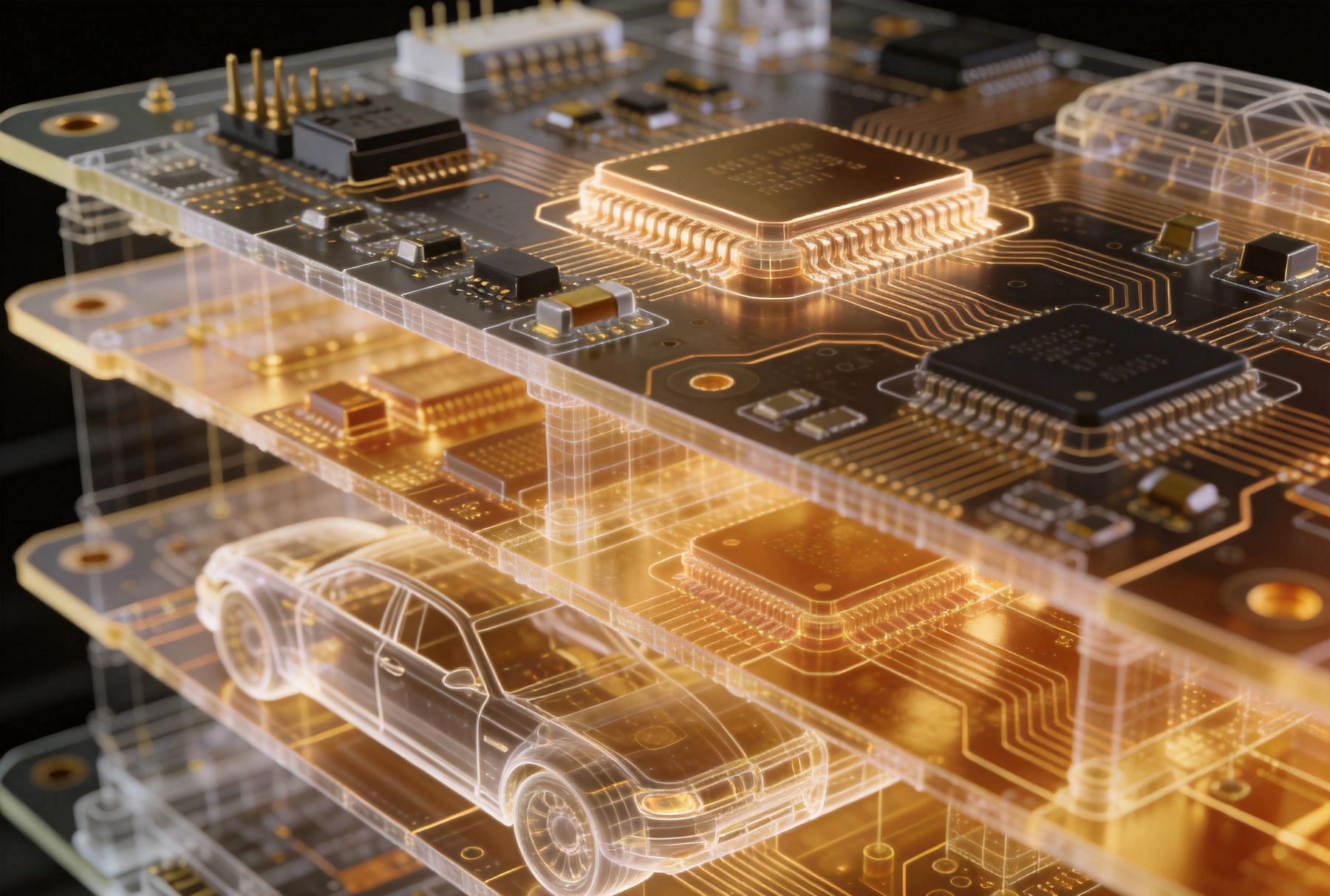
The average new car contains over 3,000 semiconductor devices and more than 100 electronic control units (ECUs). These components communicate through intricate networks of multilayer PCBs that route power, ground, and signal traces across dozens of layers. A failure in any one of these boards could mean the difference between life and death on the road.
Consider the battery management system (BMS) in an electric vehicle. This single board monitors cell voltages, temperatures, and current flow across hundreds of battery cells. It must make split-second decisions about charging, discharging, and Thermal Management—all while operating in an electrically noisy environment under extreme temperature conditions. A standard consumer-grade PCB simply cannot handle these demands.
The Automotive Electronics Council (AEC) established the AEC-Q100 and AEC-Q200 standards as the foundational requirements for automotive-grade components. These aren't suggestions—they're hard requirements that every PCB destined for automotive applications must satisfy.
AEC-Q100 specifically addresses integrated circuits and the PCBs that house them. It mandates rigorous stress testing including:
AEC-Q200 focuses on passive components but reinforces the overall reliability ecosystem. For multilayer PCBs, this means using only AEC-Q200 certified base materials from trusted suppliers with documented traceability.
Beyond product-level testing, Automotive Pcb manufacturers must operate under Iatf 16949—the Quality Management standard specifically for the automotive industry. This standard requires:
Most importanly, Iatf 16949 mandates defect prevention rather than detection. Automotive Pcb suppliers cannot simply inspect defects out of their products—they must build quality into every step of the process.
Automotive environments are brutal. A PCB mounted near the engine bay might experience temperatures from -40°C during a winter night in Minnesota to +150°C during sustained highway driving. Meanwhile, a board inside the passenger cabin faces entirely different challenges: humidity from passengers breathing, salt exposure from coastal climates, and chemical exposure from cleaning products.
High-reliability multilayer PCBs address these challenges through careful material selection:
Modern vehicles transmit data at ever-increasing speeds. Autonomous vehicles use radar, lidar, and camera systems that generate gigabytes of data per second. This data must be routed across multilayer PCBs without corruption from electromagnetic interference (EMI).
High-reliability multilayer PCBs provide superior Signal Integrity through several mechanisms:
For ADAS applications, Signal Integrity isn't optional—it's a safety requirement. A corrupted radar return could cause an autonomous vehicle to miss detecting an obstacle.
Vehicles vibrate constantly. From engine harmonics to road surface irregularities, boards experience continuous mechanical stress throughout their operational life. Automotive PCBs must survive vibration profiles defined in ISO 16750-3, which specifies acceleration levels, frequency ranges, and test durations.
Multilayer Pcb construction addresses vibration resistance through:
Every major automotive electronic system relies on high-reliability multilayer PCBs:
Choosing an automotive PCB supplier requires careful evaluation beyond simply reviewing a price quote. Key considerations include:
The demand for high-reliability multilayer PCBs in automotive electronics stems from the unforgiving nature of vehicle operation. These boards must function flawlessly across extreme temperatures, survive relentless vibration, maintain signal integrity at high data rates, and continue operating for 15+ years without failure.
Meeting these requirements demands rigorous adherence to standards like AEC-Q100, IATF 16949, and ISO 16750, combined with premium materials, precision manufacturing, and comprehensive testing. When safety-critical functions depend on electronic reliability, there's simply no room for compromise.
Automotive-grade PCBs must meet stricter temperature ranges (-40°C to +150°C versus -20°C to +105°C for consumer boards), survive vibration testing per ISO 16750-3, maintain defect rates below 1 PPM, and come with full material and process traceability. Consumer boards focus on cost optimization and don't require AEC or IATF certifications.
Typical automotive multilayer PCBs range from 4 to 16 layers, depending on complexity. ADAS controllers and BMS boards commonly use 8-16 layers to accommodate high-speed signals, power distribution, and ground plane requirements.
Automotive electronics require a design life of 15 years or more, with some components targeting 20 years. This compares to consumer electronics that typically target 3-5 years of useful life.
Blind and Buried Vias provide higher circuit density, reduce signal path lengths, improve signal integrity, and eliminate stress concentrations at board edges that can lead to vibration-related failures.
Enig (Electroless Nickel Immersion Gold) is the most common automotive Pcb Surface Finish due to its flatness, solderability, and resistance to oxidation. Hasl (Hot Air Solder Leveling) is avoided for fine-pitch components due to unevenness.
Selecting a High-Speed PCB Manufacturer for 5G TelecommunicationsAugust/13/2026
Why Medical Devices Require Specialized High-Reliability PCB ManufacturersSeptember/15/2026
Common DFM Mistakes in Rigid-Flex PCB Layouts: A Comprehensive GuideJuly/29/2026
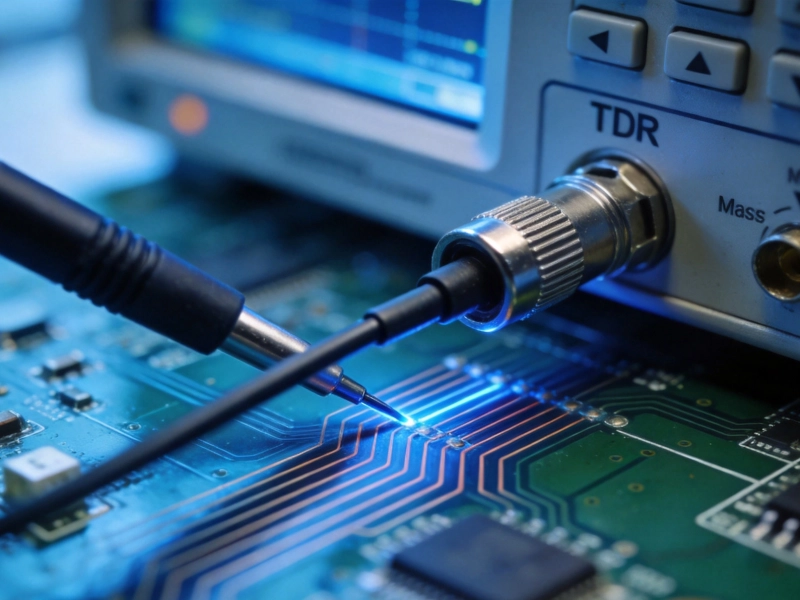
Controlled Impedance Testing: Ensuring Performance in High-Speed BoardsOctober/15/2026
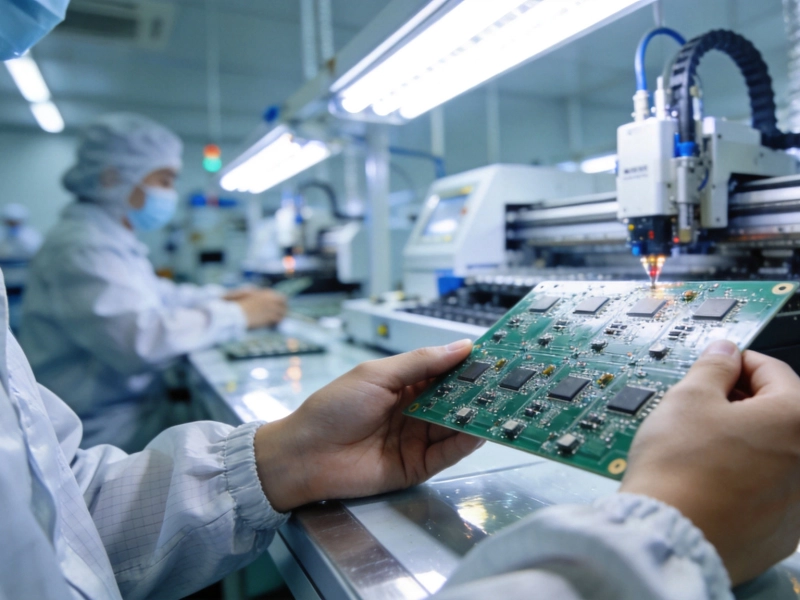
What to Look for in a Reliable SMT PCB Assembly Partner in ChinaAugust/11/2026
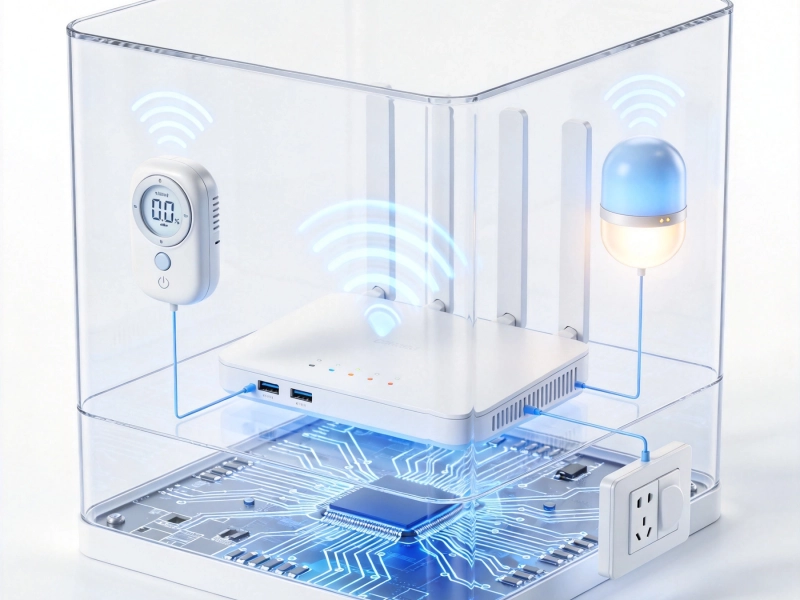
Smart Home Devices: Integrating High-Frequency PCBs for Wi-Fi/BluetoothSeptember/21/2026

High-Frequency PCBs in Radar and Satellite Communication SystemsAugust/03/2026
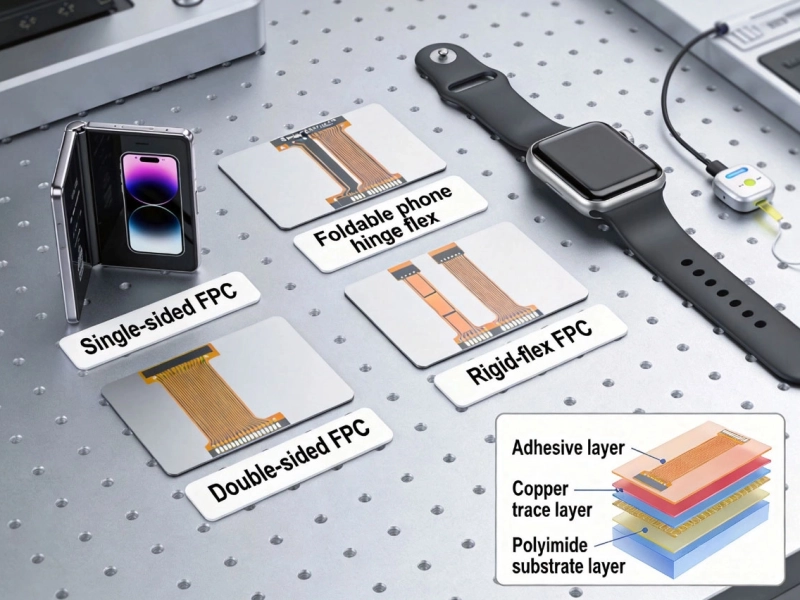
Introduction to Flexible Printed Circuit Boards: A Practical Engineering GuideMay/18/2026