
The Printed Circuit Board sits at the heart of virtually every electronic device we rely on daily—smartphones, automotive systems, medical equipment, and industrial machinery. As product cycles compress and design complexity grows, manufacturers face mounting pressure to deliver higher-quality PCBs faster than ever before. Artificial intelligence has emerged as the game-changing technology that addresses these challenges, fundamentally reshaping how engineers approach Pcb Design and how production facilities operate.
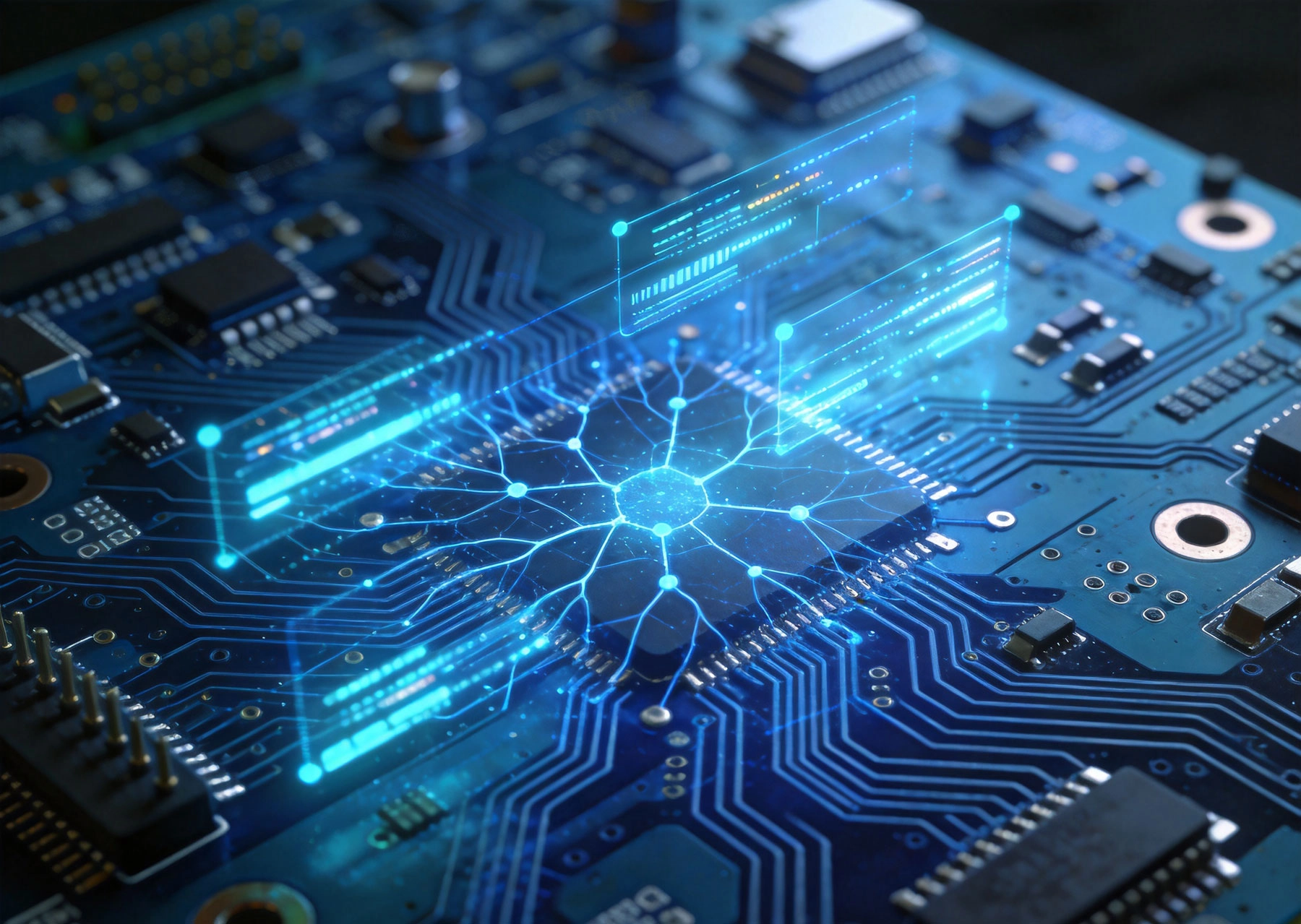
Traditional Pcb Design has always been a meticulous process requiring extensive human expertise. Engineers spend countless hours manually routing traces, optimizing component placement, and running design rule checks. While these methods produce reliable results, they introduce significant bottlenecks that slow Time-to-market and limit design innovation. AI-powered tools now augment human capabilities by automating routine decisions while enabling engineers to focus on higher-value creative work.
Modern AI algorithms analyze thousands of variables simultaneously when determining optimal component placement. These systems consider Signal Integrity, Thermal Management, manufacturing constraints, and cost optimization all at once—something no human designer could accomplish efficiently. Machine learning models trained on millions of successful designs identify placement patterns that minimize electromagnetic interference while maximizing production yield rates.
Designers report that AI-assisted placement typically reduces this phase from days to hours. The technology doesn't replace engineering judgment; instead, it presents optimized proposals that engineers refine based on application-specific requirements. This collaborative approach combines the pattern recognition strengths of AI with human domain expertise.
Trace routing represents one of the most time-intensive aspects of Multilayer Pcb design. Early automated routers produced results that required extensive manual correction, often creating more work than they saved. Contemporary AI routing engines have overcome these limitations through reinforcement learning approaches that improve with each project.
These intelligent systems understand manufacturing limitations—they know which routing patterns cause Manufacturing Defects and automatically avoid them. They also optimize for factors like impedance control, differential pair matching, and signal timing budgets. The result is router output that frequently requires minimal human intervention, sometimes as little as adjusting a few critical nets.
Design rule checking has existed for decades, but traditional rule sets struggle to catch subtle issues that cause field failures. AI-based verification goes beyond static rule evaluation by simulating real-world operating conditions and predicting failure modes before prototypes are built.
Machine learning models trained on production data can identify design features that historically caused manufacturing problems. Perhaps certain pad geometries consistently lead to solder voids, or specific trace spacing triggers shorts under thermal stress. AI systems flag these concerns during design rather than discovering them during production, saving enormous rework costs.
Manufacturers using AI verification report defect rates dropping by 30-50% on complex designs. The technology proves particularly valuable for High-density Interconnect (HDI) boards where traditional design rules provide insufficient guidance for manufacturing success.
High-speed designs require careful attention to Signal Integrity—reflections, crosstalk, and timing violations can render otherwise functional boards useless. AI tools perform comprehensive signal integrity simulations that would take conventional software hours or days to complete. They automatically identify potential problem areas and suggest design modifications to address them.
These systems learn from each simulation, building increasingly sophisticated models of how different design choices impact signal quality. A design optimized for signal integrity in one application can leverage learnings from similar successful projects.
AI's influence extends well beyond the design workstation into the production environment. Smart factories now deploy AI systems throughout their manufacturing lines, optimizing processes in real-time and predicting equipment failures before they disrupt production.
Predictive quality systems monitor manufacturing parameters—temperature profiles, conveyor speeds, chemical concentrations—and automatically adjust them to maintain optimal output. When these systems detect drift from ideal conditions, they initiate corrections before defective boards are produced rather than identifying problems during inspection.
AI also optimizes panel utilization, determining the most efficient arrangement of boards within manufacturing panels to minimize material waste. For high-volume production, even small improvements in panel utilization translate to substantial cost savings.
Equipment failures cause costly production interruptions that ripple through supply chains. AI-powered monitoring systems analyze equipment sensor data to predict failures weeks in advance, enabling scheduled maintenance during planned downtime rather than emergency repairs.
These predictive systems monitor vibration signatures, thermal patterns, and electrical consumption to identify subtle changes that precede mechanical failures. Maintenance teams receive specific predictions about which components require attention and when, transforming reactive maintenance into strategic asset management.
Traditional Aoi systems struggle with increasingly miniaturized components and subtle defect types. AI-enhanced inspection systems leverage computer vision models trained on millions of inspected boards to identify defects that rule-based systems miss while reducing false positive rates that create unnecessary rework.
The technology proves especially valuable for detecting subjective defects—scratches, contamination, Conformal Coating issues—where human inspectors historically made inconsistent judgments. AI provides consistent, objective assessment across entire production runs.
Despite AI's transformative capabilities, successful implementation requires thoughtful integration with human expertise. Engineers remain essential for defining design requirements, validating AI recommendations, and making judgments in ambiguous situations. The technology augments rather than replaces human intelligence.
Training becomes a critical success factor. Engineers need new skills to effectively collaborate with AI tools—understanding how to interpret AI recommendations, when to override them, and how to provide feedback that improves system performance. Organizations investing in AI should allocate resources for training alongside technology deployment.
The trajectory suggests increasingly sophisticated AI capabilities on the horizon. Generative design AI that proposes entirely novel architectures based on performance requirements represents an active development area. Fully integrated design-to-manufacturing workflows where AI coordinates activities across the entire value chain are emerging from research into practical application.
Supply Chain Optimization represents another frontier where AI delivers value—predicting component availability, optimizing inventory levels, and identifying alternative sources when disruptions occur. These capabilities prove increasingly critical as global supply chains face ongoing uncertainty.
AI has moved from experimental technology to practical necessity in PCB design and manufacturing. Organizations adopting these tools gain competitive advantages through faster design cycles, higher quality outputs, and more efficient production operations. The technology continues advancing rapidly, promising even more transformative capabilities in coming years.
For manufacturers evaluating AI investments, starting with well-defined use cases that deliver measurable returns provides the best path forward. Design verification and automated routing typically offer the fastest time-to-value, while predictive maintenance and process optimization deliver sustained benefits over longer time horizons. The key is beginning the journey rather than waiting for perfect conditions that never arrive.
Whether you manufacture consumer electronics, automotive systems, or mission-critical medical devices, AI offers practical tools to improve your competitiveness. The technology has matured beyond proof-of-concept demonstrations into production-proven solutions that deliver measurable results. Now is the time to evaluate how AI can transform your PCB operations.
Can I Mix Heavy Copper and Fine Pitch Components on One Board?September/28/2026
Need It Fast? The Benefits of a Quick Turn PCB Manufacturer in ChinaJune/16/2026
How DFM Analysis Saves You Money on Multilayer PCBsAugust/19/2026
Smart Home Devices: Integrating High-Frequency PCBs for Wi-Fi/BluetoothSeptember/21/2026
Dynamic vs. Static Flex: Which FPC Type Fits Your Project?July/20/2026
Top 10 DFM Tips to Avoid Errors in Your Next PCB OrderJune/18/2026
Turnkey PCB Assembly: Simplifying Your Supply Chain with One VendorOctober/10/2026
Thru-Hole vs. SMT: Choosing the Right Assembly Technology for Your PCBJuly/10/2026