Open Nav

When it comes to Pcb Assembly, engineers face a critical decision: should you use through-hole technology (THT) or Surface Mount Technology (SMT)? This choice impacts everything from manufacturing costs and production speed to product reliability and performance. Whether you're designing a consumer electronics device, industrial control system, or aerospace component, understanding the differences between these two assembly technologies is essential for making informed decisions that align with your project requirements and budget constraints.
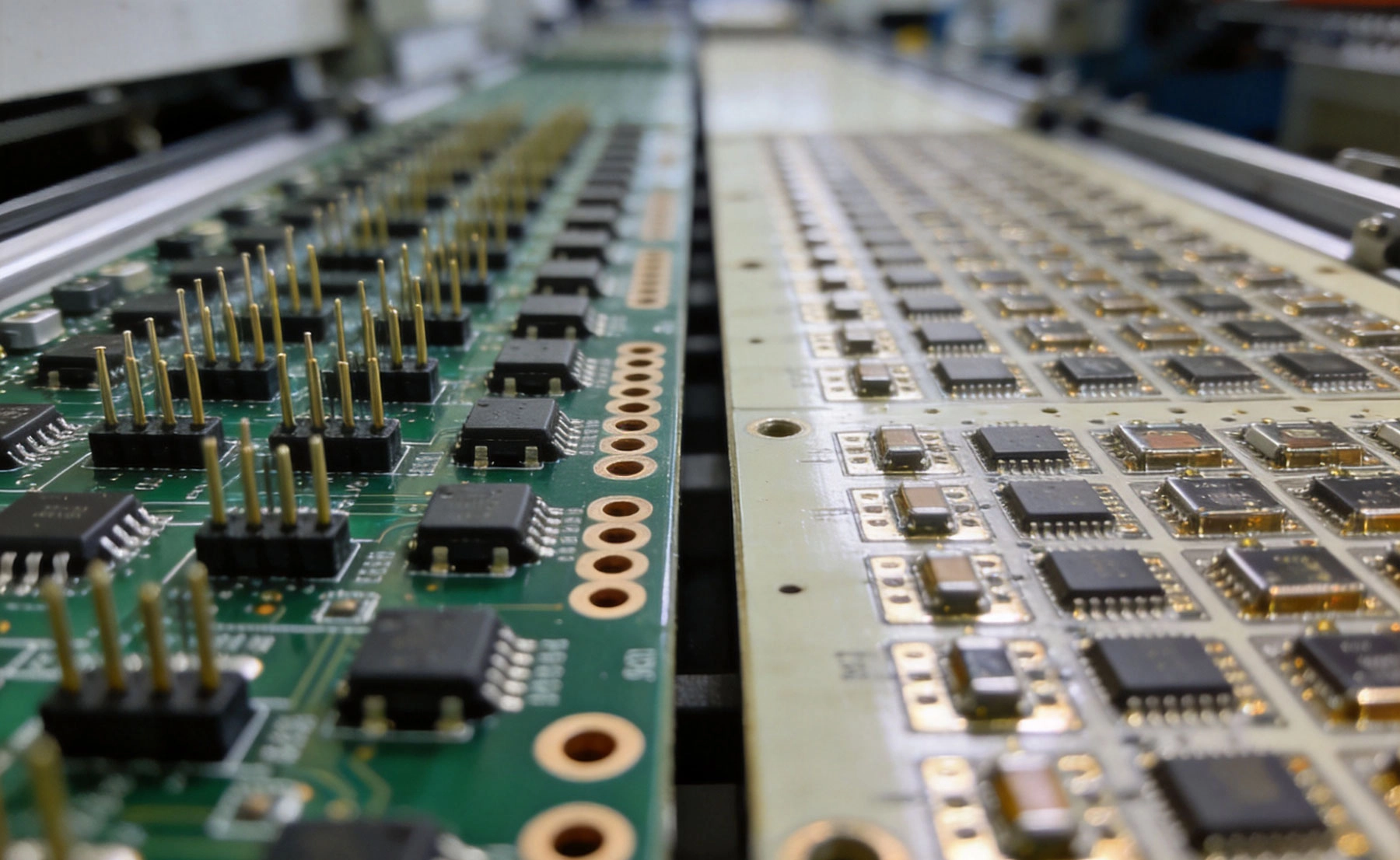
Through-hole technology has been the backbone of Electronics Manufacturing since the 1950s. Components with long leads are inserted through holes drilled in the PCB and soldered to the opposite side. Despite being considered an older technology, THT remains indispensable in many applications where reliability and mechanical strength are paramount.
Through-hole components feature wire leads that pass completely through the PCB before being soldered. This creates a mechanical bond between the component, the PCB, and the solder joint. The physical connection provides exceptional mechanical stability, making THT ideal for components that will endure mechanical stress, vibration, or thermal cycling.
The Manufacturing Process for THT assembly involves several distinct steps. First, holes are drilled into the PCB at precise locations. Components are then inserted manually or using automated insertion machines. Finally, the board undergoes wave soldering or manual soldering to create electrical connections. While this process is more time-consuming than SMT, it produces robust connections that withstand harsh conditions.
Superior Mechanical Strength: The most significant advantage of THT is its exceptional mechanical stability. Components mounted through the board can withstand substantial physical stress, vibration, and shock. This makes THT the preferred choice for military equipment, aerospace applications, Automotive Electronics, and industrial machinery where reliability cannot be compromised.
Excellent Thermal Performance: Through-hole components generally handle higher power levels and dissipate heat more effectively than their surface-mount counterparts. The larger physical size and direct connection to both sides of the PCB enable better heat transfer, which is crucial for Power Electronics and high-current applications.
Ease of Prototyping and Repair: THT components are significantly easier to replace or modify during prototyping and field repair. Technicians can desolder and replace through-hole components with standard soldering equipment, reducing maintenance costs and downtime.
Better for High-Voltage Applications: The larger physical spacing and air gaps between through-hole components reduce the risk of arcing and electrical breakdown, making THT safer for high-voltage circuits.
Higher Manufacturing Costs: THT assembly requires drilling holes through the entire PCB, which increases fabrication costs. The assembly process is also slower because components must be inserted from one side and soldered from the other, often requiring multiple manufacturing steps.
Larger PCB Size: Through-hole components occupy more board space because they need room for drilling and must be spaced further apart to accommodate the leads. This limits component density and makes THT unsuitable for compact, portable devices.
Limited Automation: While automated insertion machines exist, THT assembly generally cannot achieve the same level of automation and speed as SMT. This results in longer production times and higher labor costs for high-volume manufacturing.
Surface Mount Technology emerged in the 1960s and revolutionized Electronics Manufacturing by the 1980s. Instead of inserting leads through holes, SMT components are mounted directly onto the surface of the PCB and soldered in place. This approach has become the dominant assembly technology for modern electronics.
Surface mount components, also called surface mount devices (SMDs), are designed to sit flat on the PCB surface. They have small metal pads or leads that make direct contact with copper pads on the board. Solder paste is applied to these pads, components are placed using precision pick-and-place machines, and the entire board is heated in a reflow oven to create solder joints.
The SMT Manufacturing Process is highly automated and efficient. Stencil printers apply solder paste with remarkable precision. High-speed pick-and-place machines can position thousands of components per hour. Reflow soldering creates consistent, high-quality joints across the entire board in a single heating cycle.
Higher Component Density: SMT enables dramatically higher component density because components mount directly to the board surface without requiring through-holes. This allows for smaller, lighter products and makes double-sided component mounting practical. Modern smartphones and wearable devices would be impossible without SMT.
Faster Manufacturing: Smt Assembly is significantly faster than THT. Automated pick-and-place machines can mount components at rates exceeding 50,000 components per hour. The reflow soldering process handles the entire board simultaneously, eliminating the need for multiple soldering operations.
Lower Production Costs: The elimination of drilling operations reduces PCB Fabrication costs. Automated assembly reduces labor costs. Higher production speeds improve throughput. These factors combine to make SMT more cost-effective for high-volume production.
Superior High-Frequency Performance: Surface mount components have minimal lead inductance, making them ideal for high-frequency applications. The short connections between components and the PCB reduce parasitic capacitance and inductance, improving Signal Integrity in RF and high-speed digital circuits.
Double-Sided Assembly: SMT components can be mounted on both sides of the PCB, further increasing component density and design flexibility. This is particularly valuable for complex devices where space is at a premium.
Reduced Mechanical Strength: SMT components rely solely on solder joints for mechanical attachment. While modern solder alloys provide adequate strength for most applications, SMT components cannot match the mechanical robustness of through-hole mounting. This makes SMT less suitable for applications with high mechanical stress or severe vibration.
Challenging Repair and Rework: Surface mount components, especially small packages like 0201 or QFN devices, require specialized equipment and skilled technicians for replacement. The small size and proximity to adjacent components make manual repair difficult and risk damaging nearby parts or the PCB itself.
Thermal Management Concerns: SMT components generally have less effective Heat Dissipation than through-hole parts. The small size limits thermal mass, and the solder connection provides less heat transfer than a through-hole lead. High-power applications may require additional Thermal Management strategies.
Initial Equipment Investment: Setting up SMT production lines requires significant capital investment in stencil printers, pick-and-place machines, and reflow ovens. This makes SMT less economical for very low-volume production or prototyping.
Selecting between through-hole and surface mount technology requires careful consideration of multiple factors. Here are the key decision criteria that should guide your choice.
Consider the operating environment of your product. Military, aerospace, automotive, and industrial applications often favor THT for its superior reliability under vibration, shock, and extreme temperatures. Consumer electronics, computers, and communications equipment typically use SMT for its size and cost advantages.
For products that will undergo frequent handling or experience mechanical stress, THT provides the robustness needed for long-term reliability. Conversely, products in controlled environments where size and weight are critical benefit most from SMT.
Production volume significantly impacts the cost-effectiveness of each technology. High-volume production (thousands to millions of units) strongly favors SMT due to automation efficiencies and lower per-unit costs. Low-volume production or prototyping may be more practical with THT because it requires less specialized equipment and allows easier design modifications.
Medium-volume production requires careful analysis. The crossover point where SMT becomes more economical depends on component mix, board complexity, and available manufacturing capabilities.
Not all components are available in both package types. Some specialized components, particularly high-power semiconductors, large capacitors, and connectors, may only be available in through-hole packages. Conversely, many modern integrated circuits, especially high-pin-count devices, are only manufactured in surface mount packages.
Your component selection may dictate your assembly technology, or you may need to use mixed-technology assembly to accommodate specific component requirements.
If your product must be compact and lightweight, SMT is almost certainly required. Modern portable electronics would be impossible without the density advantages of surface mount technology. However, if board size is not constrained, THT may offer advantages in reliability and ease of service.
Consider the consequences of component failure. Mission-critical applications such as medical devices, safety systems, and aerospace electronics often specify THT for components subject to mechanical stress. The superior mechanical attachment of through-hole mounting provides additional insurance against connection failures.
High-power applications may require through-hole components for better Heat Dissipation. High-frequency circuits benefit from the reduced parasitics of surface mount components. Mixed-signal designs may require careful selection of package types to optimize both thermal and electrical performance.
Many modern PCB designs use both through-hole and surface mount technologies, combining the strengths of each approach. This mixed-technology approach has become standard practice in many industries.
Power Electronics often use surface mount components for control circuits while employing through-hole components for power handling. Connectors, switches, and transformers frequently use through-hole mounting for mechanical strength while surrounding circuitry uses SMT for density.
Automotive Electronics commonly use mixed technology. Critical safety systems may use THT for reliability while infotainment and convenience features use SMT for cost efficiency.
Mixed-technology boards require careful manufacturing planning. The typical process involves mounting surface mount components first, followed by through-hole insertion and soldering. Some manufacturers use selective soldering for through-hole components on boards that already have SMT components on both sides.
Design For Manufacturability becomes more complex with mixed technology. Component placement must account for both assembly processes, and thermal profiles must accommodate the soldering requirements of both component types.
The electronics industry continues to evolve, with implications for both THT and SMT. Understanding these trends helps inform long-term technology decisions.
Component Miniaturization continues, with 01005 and even smaller packages becoming more common. Advanced Packaging technologies like system-in-package (SiP) and 3D stacking further increase integration density. Improved solder alloys and underfill materials address reliability concerns.
Inspection technology has advanced significantly. Automated Optical Inspection (Aoi) and X-ray Inspection systems can detect defects in complex surface mount assemblies with high accuracy, improving Quality Control.
While SMT dominates consumer electronics, through-hole technology continues to evolve. Press-fit connectors eliminate the need for soldering while maintaining the mechanical advantages of through-hole mounting. Improved hole plating techniques enhance reliability and manufacturability.
The ongoing demand for reliability in automotive, aerospace, and industrial applications ensures that THT will remain relevant for the foreseeable future.
Choosing between through-hole and surface mount technology is not simply a matter of selecting the newest or most popular option. Both technologies have distinct advantages that make them appropriate for different applications. Surface mount technology dominates modern electronics manufacturing due to its size, cost, and automation advantages. However, through-hole technology remains essential for applications requiring maximum reliability, mechanical strength, and thermal performance.
The best approach for most projects is to base your decision on specific application requirements rather than general preferences. Consider the operating environment, production volume, reliability requirements, and component availability. In many cases, a mixed-technology approach provides the optimal balance of performance, reliability, and cost.
By understanding the strengths and limitations of both through-hole and surface mount technologies, you can make informed decisions that result in products that meet performance requirements while optimizing manufacturing efficiency and cost.
Yes, mixed-technology assembly is common and often optimal. Surface mount components are typically placed first, followed by through-hole components. This approach combines the density advantages of SMT with the mechanical strength of THT where needed.
No, through-hole technology remains essential for specific applications. While SMT dominates consumer electronics, THT continues to be the preferred choice for high-reliability applications in aerospace, military, automotive, and industrial equipment where mechanical stress and vibration are concerns.
Through-hole technology is generally better for prototyping because components are easier to solder and replace manually. However, many modern components are only available in surface mount packages, so prototyping with SMT has become increasingly common.
Consider mechanical stress, thermal requirements, and service needs. Use THT for connectors, heavy components, high-power parts, and anything subject to physical stress. Use SMT for high-density digital circuits, RF components, and areas where board space is limited.
SMT is g
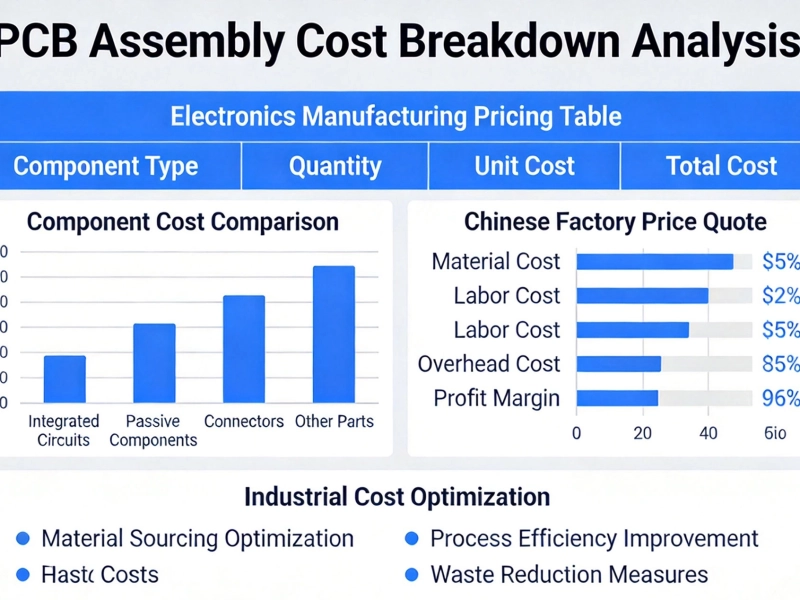
PCB Assembly Price China: A Complete Cost Guide for 2024May/18/2026
How to Reduce Your PCB Manufacturing Costs Without Sacrificing QualityJuly/08/2026
Cost-Benefit Analysis of Rigid-Flex PCBs vs. Traditional Cable AssembliesSeptember/14/2026
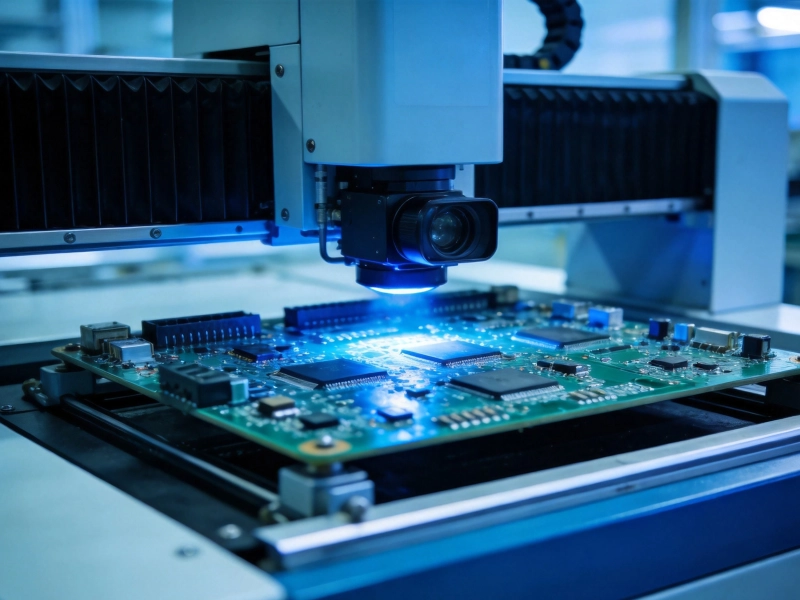
How Automated Optical Inspection (AOI) Ensures SMT QualityAugust/15/2026
The Complete Step-by-Step Process ExplainedJune/05/2026
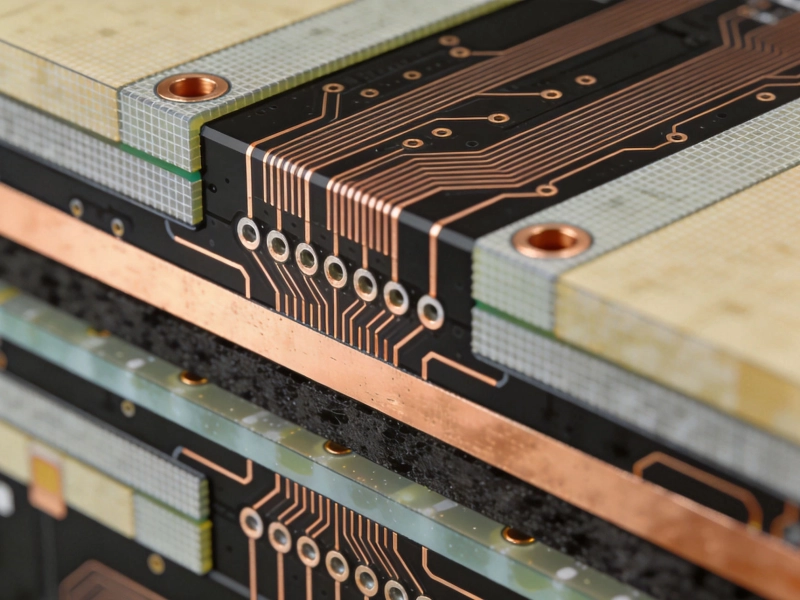
What is a Multilayer PCB? A Comprehensive Guide for EngineersJuly/02/2026

Understanding PCB Assembly Prices in China: What Factors Influence Cost?June/10/2026
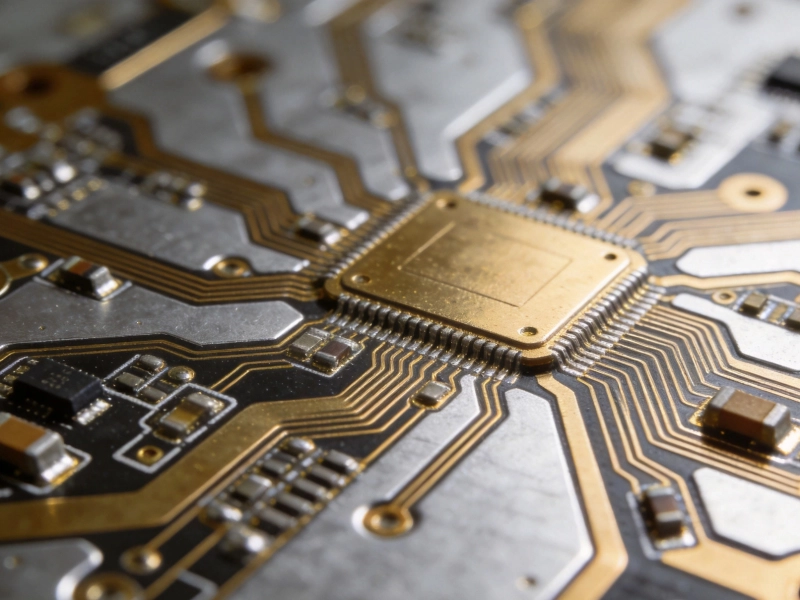
Understanding Surface Finishes: ENIG, HASL, OSP, and Immersion SilverJuly/21/2026