
When designing printed circuit boards (PCBs), selecting the right surface finish is one of the most critical decisions you'll make. The surface finish protects copper traces from oxidation, ensures reliable solderability, and directly impacts the long-term performance of your electronics. But with multiple options available—each with distinct advantages, costs, and trade-offs—how do you choose the right one?
In this guide, we'll break down the four most common PCB surface finishes: ENIG (Electroless Nickel Immersion Gold), HASL (Hot Air Solder Leveling), OSP (Organic Solderability Preservative), and Immersion Silver. By understanding their properties, you can make an informed decision that balances performance, budget, and application requirements.
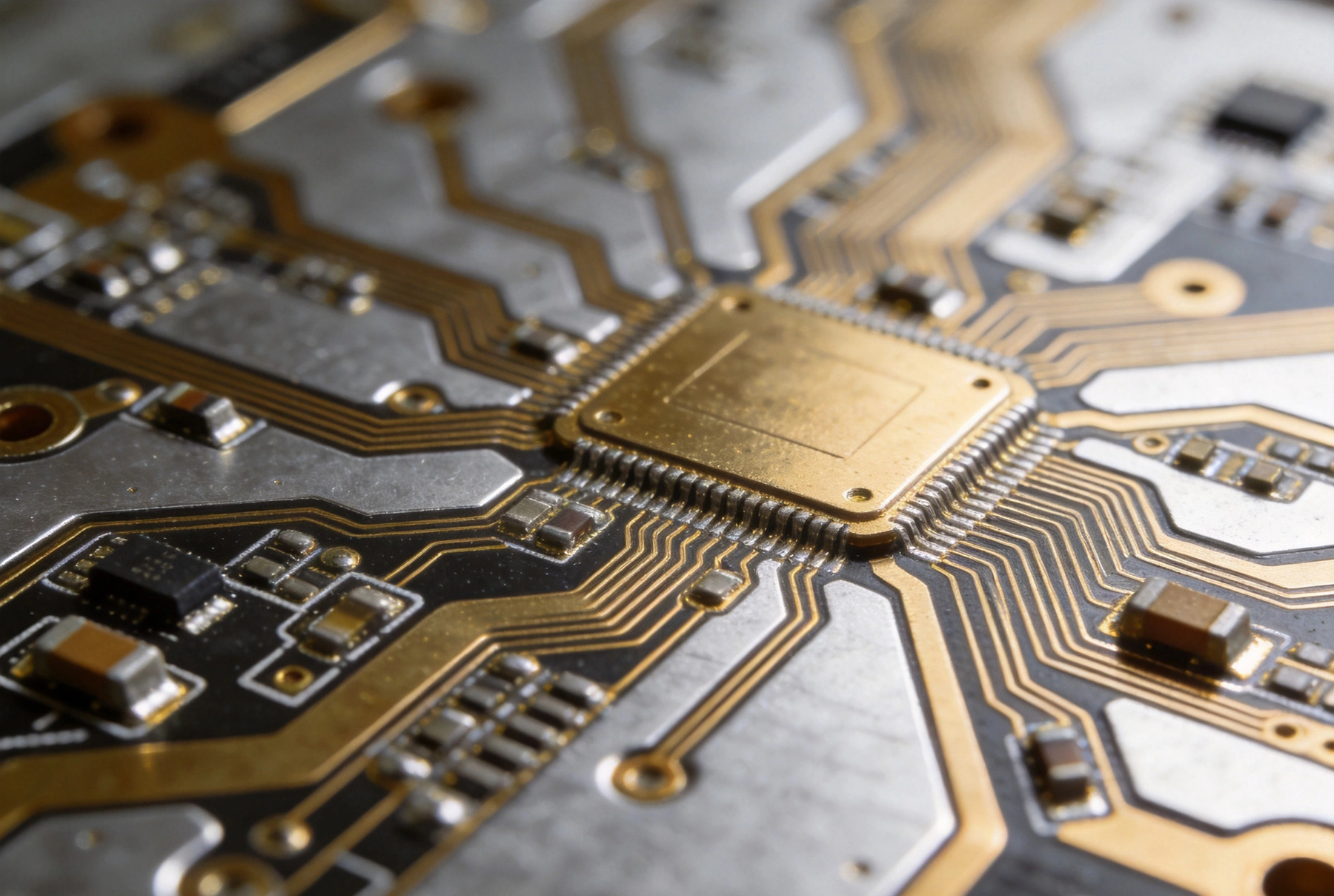
A PCB surface finish is a coating applied to exposed copper pads and traces after the etching process. Without a protective finish, copper quickly oxidizes when exposed to air, forming a non-conductive layer that prevents proper solder adhesion. This oxidation can lead to weak solder joints, connection failures, and ultimately, product defects.
The surface finish serves three primary functions:
Choosing the wrong finish can lead to soldering issues, increased rework costs, and field failures. Understanding the characteristics of each option helps you avoid these pitfalls.
Hot Air Solder Leveling (HASL) has been the most widely used surface finish for decades, and for good reason. The process involves dipping the PCB into molten solder, then using hot air knives to level the surface, leaving a thin, uniform solder coating.
Cost-Effective: HASL remains one of the most economical surface finish options. For high-volume consumer electronics where cost sensitivity is paramount, HASL delivers excellent value without compromising solderability.
Excellent Solderability: The solder coating provides an inherently solderable surface. Components adhere reliably, and the process is well-understood across the manufacturing industry.
Rework-Friendly: Because the surface is already coated in solder, rework and repair operations are straightforward. Technicians can easily reflow or touch up solder joints without special preparation.
Shelf Life: HASL-finished boards can be stored for extended periods without significant degradation, making them suitable for inventory buffering in production environments.
Uneven Surface: The hot air leveling process can create slightly uneven surfaces, which may affect fine-pitch component placement. For very small components (below 0402 or fine-pitch BGAs), this inconsistency can cause alignment issues.
Lead Content: Traditional HASL uses lead-based solder, which restricts its use in RoHS-compliant applications. While lead-free HASL is available, it requires higher processing temperatures and can be more challenging to work with.
Not Suitable for Wire Bonding: HASL surfaces are not appropriate for wire bonding applications common in semiconductor packaging.
HASL is ideal for consumer electronics, industrial controls, and general-purpose PCBs where cost is a primary concern and component geometries are not extremely fine-pitch. It's also a good choice for prototype runs where quick turnaround and reliability matter more than ultra-precise surface flatness.
Electroless Nickel Immersion Gold (ENIG) has become the gold standard—literally—for high-reliability applications. The finish consists of a nickel barrier layer covered by a thin gold layer, typically 2-4 microinches of gold over 150-300 microinches of nickel.
Flat Surface: ENIG produces an exceptionally flat, planar surface ideal for fine-pitch surface mount components, BGAs, and chip-scale packages. This flatness ensures consistent solder paste printing and component placement.
Excellent Wire Bonding: The gold surface is compatible with both aluminum and gold wire bonding, making ENIG the preferred choice for semiconductor packaging and RF applications where wire bonding is required.
Long Shelf Life: The gold layer provides superior oxidation resistance. ENIG-finished boards can be stored for 12 months or more without degradation, significantly longer than OSP or immersion silver finishes.
RoHS Compliant: ENIG is inherently lead-free, making it suitable for all RoHS-compliant applications without process modifications.
Multiple Reflows: ENIG surfaces can withstand multiple solder reflow cycles, which is essential for complex assemblies requiring double-sided population or sequential soldering operations.
Higher Cost: ENIG is significantly more expensive than HASL or OSP. The precious metal content and multi-step plating process contribute to higher per-board costs, which can be prohibitive for ultra-cost-sensitive applications.
Black Pad Risk: One of the most serious concerns with ENIG is "black pad" syndrome, where excessive phosphorus content in the nickel layer causes brittle solder joints. This defect is difficult to detect and can lead to field failures. Working with reputable manufacturers who maintain strict process controls is essential to mitigate this risk.
Signal Loss at High Frequencies: The nickel layer can introduce signal loss at very high frequencies (above 5 GHz), making ENIG less ideal for some high-frequency RF applications.
ENIG is the preferred choice for aerospace, military, medical devices, Automotive Electronics, and high-reliability industrial applications. It's also ideal for fine-pitch BGA components, wire bonding applications, and any project requiring extended shelf life or multiple assembly passes.
Organic Solderability Preservative (OSP) uses a thin organic compound layer to protect copper from oxidation. The coating is water-based, environmentally friendly, and among the most cost-effective surface finishes available.
Lowest Cost: OSP is typically the most economical surface finish option. For high-volume consumer electronics with tight cost constraints, OSP delivers significant cost savings.
Flat Surface: Like ENIG, OSP produces a very flat surface suitable for fine-pitch components and BGA packages.
Environmental Benefits: The water-based organic compound is more environmentally friendly than metal-based finishes, aligning with green manufacturing initiatives.
Simple Process: OSP application is straightforward, requiring fewer processing steps than metal plating finishes. This simplicity translates to faster turnaround times.
Short Shelf Life: OSP coatings degrade over time, with typical shelf life of 6-12 months under ideal storage conditions. Exposure to high humidity or temperature accelerates degradation.
Limited Reflows: OSP surfaces typically can withstand only one or two reflow cycles before solderability degrades. For complex assemblies requiring multiple passes, this limitation can cause issues.
Solderability Concerns: Some manufacturers report reduced solderability compared to HASL or ENIG, particularly if boards are stored for extended periods before assembly.
Not Suitable for Wire Bonding: OSP surfaces cannot be used for wire bonding applications.
OSP is ideal for high-volume consumer electronics, computer peripherals, mobile devices, and other applications where cost sensitivity is paramount and boards will be assembled relatively quickly after fabrication. It works well for single-pass assembly operations where shelf life is not a concern.
Immersion Silver offers a balance between cost and performance, providing many benefits of ENIG at a lower price point. The finish consists of a thin silver layer, typically 0.1-0.4 microns, deposited directly onto copper through an electroless plating process.
Cost-Effective: While more expensive than HASL and OSP, Immersion Silver costs significantly less than ENIG, making it an attractive middle-ground option.
Flat Surface: Immersion Silver provides a flat, uniform surface suitable for fine-pitch components and BGA packages.
Good Solderability: Silver provides excellent solderability with good wetting characteristics during the soldering process.
RoHS Compliant: Immersion Silver is lead-free and fully RoHS compliant without requiring process modifications.
High-Frequency Performance: Unlike ENIG, Immersion Silver does not introduce significant signal loss at high frequencies, making it suitable for RF and high-speed digital applications.
Shelf Life Concerns: Immersion Silver is susceptible to tarnishing and oxidation when exposed to sulfur compounds in the environment. Typical shelf life is 6-12 months under proper storage conditions.
Handling Requirements:
Silver surfaces are sensitive to handling. Direct contact with bare hands can cause contamination that affects solderability. Proper handling procedures and packaging are essential.
Not Suitable for Wire Bonding: Immersion Silver cannot be used for wire bonding applications.
Limited Assembly Window: Once the protective packaging is opened, boards should ideally be assembled within 24-48 hours to prevent oxidation.
Immersion Silver is well-suited for telecommunications equipment, networking devices, high-speed digital boards, RF applications, and mid-range consumer electronics where performance requirements exceed HASL but cost constraints preclude ENIG.
When selecting a surface finish, consider these critical factors:
Cost typically increases from OSP (lowest) → HASL → Immersion Silver → ENIG (highest). Evaluate whether premium finish benefits justify the cost for your specific application.
If boards will be stored before assembly, ENIG offers the longest shelf life (12+ months), followed by HASL (12 months), OSP (6-12 months), and Immersion Silver (6-12 months with proper storage).
For Rohs Compliance, ENIG, OSP, and Immersion Silver are inherently suitable. Lead-free HASL is available but requires process adjustments.
Consider the number of reflow cycles and assembly passes. ENIG handles multiple reflows best, while OSP is limited to 1-2 cycles.
Consumer Electronics: HASL or OSP for cost-sensitive products with standard component geometries.
Automotive: ENIG for reliability-critical applications; Immersion Silver for infotainment systems.
Medical Devices: ENIG for implantables and life-critical applications; Immersion Silver for non-critical diagnostic equipment.
Industrial Controls: HASL for general applications; ENIG for harsh environments requiring extended service life.
Telecommunications: Immersion Silver for RF and high-speed applications; ENIG for equipment requiring extended shelf life.
Aerospace/Defense: ENIG for mission-critical applications where reliability is non-negotiable.
Selecting the appropriate PCB surface finish requires balancing performance requirements, budget constraints, and application-specific needs. HASL remains the workhorse for general-purpose electronics, offering proven reliability at low cost. ENIG provides premium performance for high-reliability applications, wire bonding, and extended shelf life requirements. OSP delivers maximum cost savings for high-volume production with rapid assembly cycles. Immersion Silver offers a compelling middle ground with good performance at moderate cost.
The key is understanding your specific requirements—component geometries, shelf life needs, environmental conditions, and budget constraints—and matching them to the finish that best addresses those needs. Working closely with your PCB manufacturer to discuss these factors ensures you select the optimal surface finish for your project's success.
Ready to specify your next PCB project? Consult with your manufacturer about surface finish options and request sample boards to evaluate solderability and performance under your specific assembly conditions. The right finish choice today prevents costly failures tomorrow.
Preparing Your Gerber Files for a Smooth China PCB Fabrication ProcessSeptember/18/2026
China vs. Local PCB Suppliers: Analyzing Cost, Quality, and Lead TimeJuly/22/2026

PCB Fabrication China: A Complete Guide for Global BuyersMay/18/2026
Laser Drilling vs. Mechanical Drilling: Precision in HDI ManufacturingJuly/07/2026
Heavy Copper PCB Etching: Challenges, Tolerances, and Precision SolutionsSeptember/10/2026
PCB Prototype Pricing Models: Panelization and Setup Fees ExplainedAugust/12/2026
Understanding HDI PCB Technology: A Comprehensive Guide for BeginnersMay/13/2026
Why Low Volume PCB Manufacturing is Crucial for Agile Hardware DevelopmentOctober/16/2026