When sourcing printed circuit boards (PCBs) for your electronics projects, one critical decision stands out: should you partner with China vs. local PCB suppliers? This choice impacts your bottom line, product quality, and Time-to-market significantly. In today's competitive electronics industry, making the right supplier selection can determine whether your project succeeds or struggles with delays, cost overruns, or quality issues.
Chinese PCB manufacturers have dominated the global market for decades, offering competitive pricing and massive production capacity. Meanwhile, local suppliers promise faster communication, quicker turnaround times, and sometimes better Quality Control. But which option truly delivers the best value for your specific needs? This comprehensive analysis breaks down the key factors—cost, quality, and lead time—across both sourcing strategies to help you make data-driven decisions for your next PCB project.

Cost Analysis: China vs. Local PCB Suppliers
Cost considerations often drive the initial decision between Chinese and local PCB suppliers, but the true picture goes beyond just the quoted price per board. Understanding the complete cost structure helps you avoid hidden expenses and optimize your budget allocation effectively.
Unit Cost Advantages of Chinese Manufacturers
Chinese PCB suppliers typically offer 30-60% lower unit costs compared to Western manufacturers. This price advantage stems from several structural factors:
-
Economies of scale: China's PCB industry produces approximately 90% of the world's PCBs, creating massive production efficiencies that translate to lower costs.
-
Lower labor costs: Despite rising wages in China, labor costs remain significantly below those in North America and Europe, reducing manufacturing overhead.
-
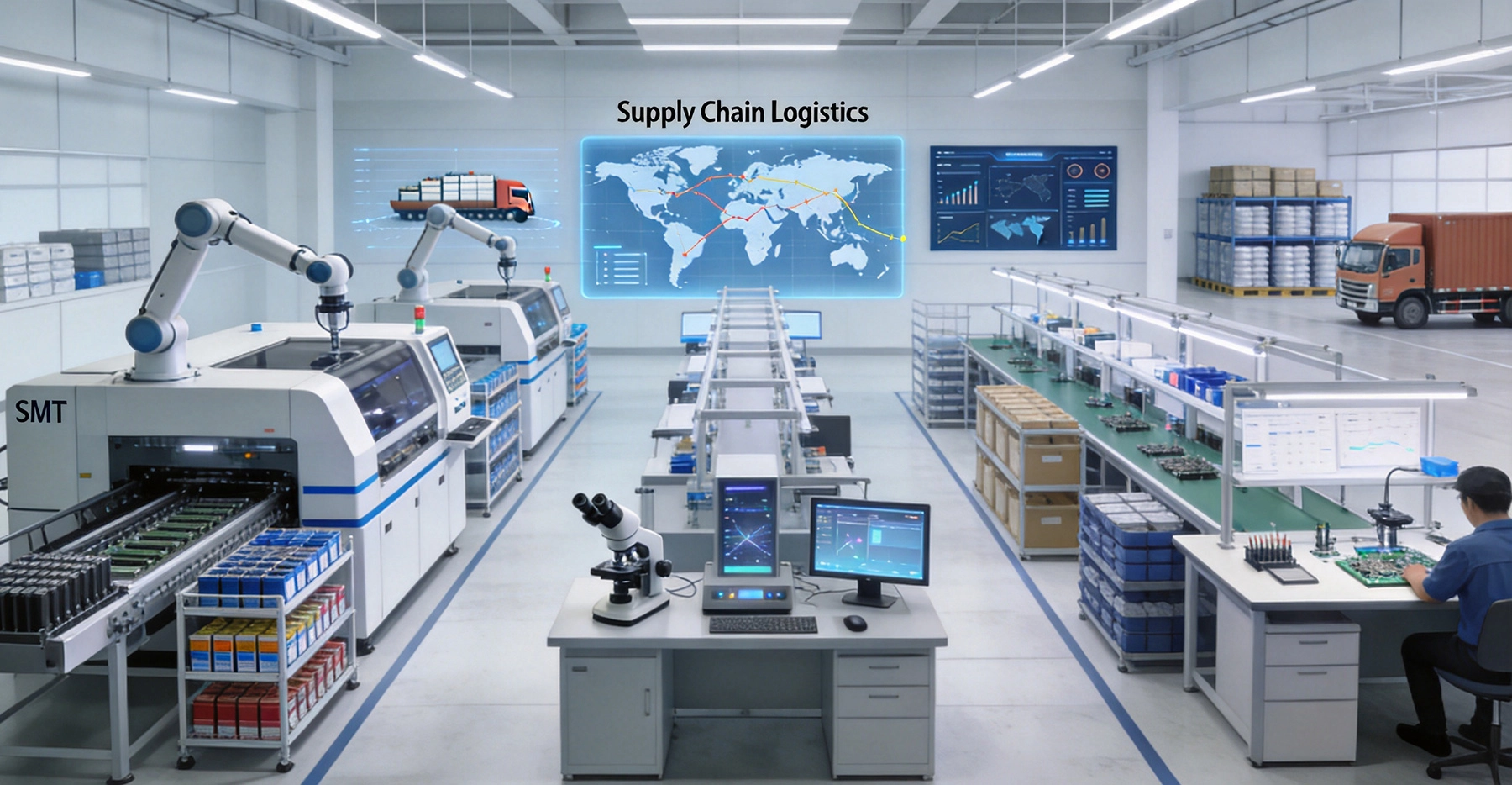
Supply chain integration: Concentrated PCB ecosystems in Shenzhen, Dongguan, and other Chinese manufacturing hubs provide easy access to raw materials, components, and specialized services at competitive prices.
-
Government support: Chinese government policies and subsidies for Electronics Manufacturing create additional cost advantages for domestic PCB producers.
For high-volume production runs (10,000+ units), Chinese suppliers often deliver unbeatable pricing that can make or break a product's market competitiveness. Startups and established companies alike leverage these cost savings to achieve healthier profit margins or invest more aggressively in product development and marketing.
Hidden Costs and Considerations
However, the apparent cost advantage of Chinese suppliers sometimes hides additional expenses that erode savings:
-
Shipping and logistics: International Shipping adds $50-200+ per shipment depending on size, weight, and urgency. Air freight for rush orders can exceed $500, significantly impacting total costs for small to medium orders.
-
Import duties and tariffs: Depending on your country's trade policies, PCB imports from China may incur customs duties ranging from 0-25%, plus potential anti-dumping duties that can substantially increase landed costs.
-
Payment terms and currency risk: Chinese suppliers typically require 30-50% upfront payment with balance before shipping. Fluctuations in exchange rates can affect your final costs, while tying up capital impacts cash flow management.
-
Communication costs: Time zone differences (8-12 hours) necessitate after-hours communication or delayed responses, potentially extending project timelines and increasing coordination overhead.
-
Quality issue costs: While improving, Quality Control varies among Chinese Manufacturers. Rework, scrap, or replacement boards add real costs that aren't always apparent in initial quotes.
When Local Suppliers Offer Competitive Pricing
Local PCB suppliers can match or beat Chinese pricing in several scenarios:
-
Small batch production: For prototype runs under 50 units, setup costs often dominate total expenses. Local suppliers with lower minimum order quantities (MOQs) and minimal shipping requirements can offer better total costs.
-
Quick-turn prototypes: Rush services from local shops (24-72 hour turnaround) may cost more per board but save days or weeks in development time, accelerating your Time-to-market and overall project economics.
-
Complex assemblies: When PCBs require sensitive components, proprietary processes, or specialized materials, local suppliers with expertise in your specific application may provide better value despite higher unit costs.
-
Integrated services: Many local suppliers offer Design For Manufacturability (Dfm) reviews, testing, and value-added services that prevent costly mistakes and redesigns, delivering better overall value.
The key is calculating your total landed cost rather than just comparing per-board prices. Factor in shipping, duties, payment terms, quality risks, and your own internal coordination costs to determine the true economics of each sourcing option.
Quality Comparison: Standards, Capabilities, and Consistency
Quality considerations often represent the most critical factor in PCB sourcing decisions, especially for mission-critical applications in aerospace, medical devices, Automotive Electronics, and industrial equipment. Understanding quality differences between Chinese and local suppliers helps you match capabilities with your requirements.
Quality Standards and Certifications
Both Chinese and local PCB suppliers operate under similar quality frameworks, but implementation and verification differ:
-
Iso 9001 certification: Most reputable Chinese and local manufacturers maintain Iso 9001 Quality Management systems. However, certification depth varies significantly, with some suppliers maintaining superficial compliance while others embed quality throughout operations.
-
Ipc Standards compliance: IPC-A-600 for board acceptability and IPC-6012 for qualification represent global quality benchmarks. Leading Chinese suppliers typically achieve Class 2 (general electronics) and Class 3 (high reliability) standards, matching local manufacturer capabilities.
-
Industry-specific certifications: For aerospace (AS9100), automotive (Iatf 16949), and medical (Iso 13485) applications, both sourcing options exist, but local suppliers often have more established track records in highly regulated industries due to closer customer relationships and easier audits.
-
Material specifications: Chinese suppliers have dramatically improved material sourcing over the past decade, with many now using reputable laminate suppliers like Isola, Rogers, and Panasonic. However, material traceability and consistency can still vary, particularly for specialized high-frequency or high-temperature materials.
Manufacturing Capabilities and Technology
Chinese PCB manufacturers have invested heavily in advanced equipment and capabilities:
-
HDI and advanced technologies: Leading Chinese fabs excel in High-density Interconnect (HDI) boards, with capabilities for Microvias, Sequential Lamination, and via-in-pad processes that rival or exceed many local shops.
-
Multilayer capabilities: Chinese suppliers routinely produce 30+ layer boards for high-complexity applications, with competitive pricing for advanced stackups.
-
Surface finishes: Common finishes (Enig, Hasl, Osp, Immersion Silver) are universally available. For specialized finishes like Electroless Palladium or hard gold, Chinese suppliers often provide more cost-effective options.
-
Testing and inspection: Flying probe testing, Automated Optical Inspection (Aoi), and electrical testing are standard. However, X-ray Inspection for Buried Vias and advanced solder joint analysis varies by supplier sophistication.
-
Material innovations: Chinese fabs have rapidly adopted new materials for high-frequency, high-power, and Flexible Pcb applications, though local suppliers sometimes maintain advantages in cutting-edge material applications due to closer partnerships with material suppliers.
Quality Consistency and Control
This area often reveals the most significant differences between sourcing strategies:
-
Process consistency: Established Chinese suppliers with mature quality systems deliver remarkably consistent quality across large production volumes. However, variability increases dramatically with smaller, less-experienced manufacturers.
-
Change management: Chinese suppliers sometimes make process or material changes without explicit customer notification, potentially affecting product performance. Local suppliers typically communicate changes more transparently and seek approval before modifications.
-
Quality issue resolution: When problems occur, local suppliers offer faster response times and easier collaboration for root cause analysis and corrective actions. Chinese suppliers may require more time and effort for resolution, especially across time zones and language barriers.
-
Supplier audits: Auditing Chinese Manufacturers requires significant travel expense and coordination effort. Local suppliers enable frequent, low-cost oversight and relationship building that often translates to better quality outcomes.
For consumer electronics and non-critical industrial applications, Chinese suppliers often provide excellent quality at unbeatable prices. For mission-critical applications, complex assemblies, or products requiring extensive customization, local suppliers may deliver better overall quality outcomes despite higher costs.
Lead Time Analysis: Speed, Flexibility, and Predictability
Time-to-market pressures make lead time a crucial consideration in PCB sourcing. Understanding the speed, flexibility, and predictability differences between Chinese and local suppliers helps you meet critical project deadlines and manage expectations effectively.
Standard Lead Times by Sourcing Option
Typical lead times reveal significant differences between sourcing strategies:
-
Chinese manufacturers: Standard production lead times range from 5-15 days for simple boards to 15-30 days for complex multilayer assemblies. Add 3-7 days for shipping, plus potential customs delays of 1-3 days, resulting in total lead times of 10-45 days from order to delivery.
-
Local manufacturers: Standard lead times typically run 3-10 days for simple boards and 7-21 days for complex assemblies. With minimal shipping (1-3 days) and no customs delays, total lead times range from 4-24 days from order to delivery.
-
Quick-turn services: Both sourcing options offer expedited services—Chinese suppliers provide 24-72 hour production with 1-3 day air shipping for 3-6 day total turnaround. Local suppliers often match or beat these times with 24-48 hour production and same-day/next-day delivery options.
Flexibility for Design Changes and Iterations
Product development inevitably requires design iterations and modifications:
-
Design change responsiveness: Local suppliers typically accommodate engineering change orders (ECOs) within hours, enabling rapid iteration during prototype phases. Chinese suppliers may require 1-2 days to process changes due to time zone differences and communication overhead.
-
Small batch flexibility: Local shops excel at producing 1-10 board iterations with minimal setup costs and quick turnaround. Chinese suppliers often require higher minimum quantities and longer setup times for small runs, though some quick-turn services now address this gap.
-
Order modifications: Changing order quantities or specifications mid-production proves easier with local suppliers who can adjust schedules dynamically. Chinese suppliers typically have stricter production schedules with less flexibility for modifications once orders are in process.
Predictability and Schedule Management
Meeting deadlines requires reliable schedule management and predictable performance:
-
Schedule reliability: Established suppliers in both regions generally meet their quoted lead times. However, unforeseen delays—raw material shortages, equipment issues, quality problems—occur more frequently with Chinese suppliers due to longer supply chains and communication complexities.
-
Production visibility: Local suppliers often provide real-time production status updates and enable facility visits for direct oversight. Chinese suppliers typically offer limited visibility into production progress, with status updates provided on a more limited basis.
-
Risk mitigation: When schedule risks emerge, local suppliers can often implement recovery plans more quickly due to geographic proximity and direct communication. Chinese supplier delays may require more extensive recovery efforts, including expedited shipping that adds cost and complexity.
-
Seasonal and holiday impacts: Chinese New Year and other national holidays create predictable but significant disruptions (2-4 weeks) in Chinese manufacturing capacity. Planning around these holidays requires advance ordering and buffer time, while local suppliers maintain more consistent year-round operations.
For Rapid Prototyping and time-sensitive product development cycles, local suppliers often deliver significant advantages in flexibility and predictability. For stable, high-volume production with well-established designs, Chinese suppliers provide excellent lead time performance at lower costs.
Making the Right Choice: Decision Framework
The optimal PCB sourcing strategy depends on your specific project requirements, budget constraints, and risk tolerance. This decision framework helps you systematically evaluate both options against your needs.
Choose Chinese Suppliers When:
-
Volume requirements exceed 1,000 units with stable, well-qualified designs that don't require frequent iterations.
-
Cost sensitivity is high and you've calculated favorable total landed costs after accounting for shipping, duties, and potential quality risks.
-
Technology requirements are standard (up to 12-16 layers, common surface finishes, readily available materials) rather than cutting-edge or highly specialized.
-
Quality requirements are moderate (IPC Class 2) rather than extreme reliability (Class 3, military, aerospace).
-
Lead time requirements allow 3-6 weeks for order fulfillment without jeopardizing market opportunities or project deadlines.
-
You have established relationships with proven Chinese suppliers or can dedicate resources to qualifying new partners thoroughly.
Choose Local Suppliers When:
-
Prototype quantities under 500 units with frequent design iterations and tight development timelines.
-
Quality requirements are critical for mission-critical applications, regulated industries (medical, automotive, aerospace), or products with high failure costs.
-
Technology requirements are advanced (HDI, 20+ layers, exotic materials, specialized surface finishes) requiring close collaboration with fabrication engineers.
-
Time-to-market is crucial with tight deadlines that don't allow for shipping delays, customs issues, or communication lags.
-
Supply chain security is important for strategic products, Intellectual Property Protection, or regional manufacturing requirements.
-
Value-added services matter—design support, engineering consultation, testing capabilities, or integrated assembly services beyond pure fabrication.
Hybrid Approaches for Optimal Results
Many companies successfully combine both sourcing strategies:
-
Prototype with local, produce with Chinese: Use local suppliers for Rapid Prototyping and design verification, then transition to Chinese manufacturers for cost-optimized volume production once designs are stable.
-
Complex boards locally, standard boards from China: Source highly complex or critical PCBs locally while routing standard, high-volume boards to Chinese suppliers for cost savings.
-
Regional Chinese suppliers: For companies based in Asia, working with geographically closer Chinese suppliers (Southeast Asia, Taiwan) provides some of the cost advantages of Chinese manufacturing with reduced lead times and better communication.
Conclusion
The choice between China vs. local PCB suppliers doesn't have a one-size-fits-all answer. Chinese manufacturers deliver compelling cost advantages, especially for high-volume production of standard PCBs, while local suppliers offer superior quality control, faster turnaround, and greater flexibility for complex or time-sensitive projects.
Smart companies don't choose blindly—they calculate total landed costs, match capabilities to requirements, and often employ hybrid strategies that leverage the strengths of both sourcing options. By understanding the trade-offs across cost, quality, and lead time, you can make informed decisions that optimize both your product economics and your time-to-market objectives.
The electronics industry continues evolving, with Chinese suppliers improving quality capabilities and local manufacturers investing in cost competitiveness. Your sourcing strategy should evolve too, regularly reassessing options as your products mature, market conditions change, and supplier capabilities advance. The right PCB partnership today might look different from the optimal choice tomorrow—stay flexible, keep evaluating, and choose partners that grow with your business.
Frequently Asked Questions
Are Chinese PCB suppliers reliable for high-quality applications?
Yes, many Chinese PCB suppliers are highly reliable for quality applications, particularly for IPC Class 2 requirements. However, for mission-critical Class 3 applications or highly regulated industries (aerospace, medical, automotive), local suppliers often provide better Quality Assurance, easier audits, and more responsive problem resolution.
How do I calculate total landed cost for PCB sourcing?
Total landed cost includes: (unit price × quantity) + shipping costs + import duties/tariffs + payment processing fees + quality risk costs (potential rework/replacement) + your internal coordination costs. Comparing these total costs across sourcing options provides accurate decision-making data rather than just comparing per-board prices.
What's the typical difference in lead time between Chinese and local suppliers?
Chinese suppliers typically require 10-45 days from order to delivery (including shipping and customs), while local suppliers usually deliver in 4-24 days. Quick-turn services from both regions can achieve 3-6 day turnaround, but local suppliers often offer faster iteration cycles for design changes during prototyping.
Can I use both Chinese and local PCB suppliers for the same project?
Absolutely—this hybrid approach is common and often optimal. Use local suppliers for rapid prototyping and design iteration, then transition to Chinese manufacturers for cost-optimized volume production once designs stabilize. Alternatively, source complex or critical boards locally while routing standard boards to Chinese suppliers for cost savings.
How do I find reliable Chinese PCB suppliers?
Start with suppliers certified to ISO 9001 and Ipc Standards. Request samples, check customer references, and verify their experience with similar PCB technologies. Consider visiting facilities for critical projects. Online marketplaces and industry associations can provide supplier directories, but thorough qualification remains essential for building successful long-term partnerships.