Open Nav

Getting a Printed Circuit Board to work in the lab is one thing. Getting it to perform reliably at scale—that's where many engineering teams hit a wall. The jump from prototype to mass production isn't just about ordering more boards. It's about rethinking design decisions, supply chain arrangements, and Quality Control strategies that were never really stress-tested during the prototype phase.
We've seen it happen countless times: a product that worked perfectly during testing suddenly develops field failures after shipping. A design that seemed cost-effective at 100 units becomes prohibitively expensive at 10,000. These aren't random setbacks—they're predictable outcomes of a transition that wasn't properly planned.
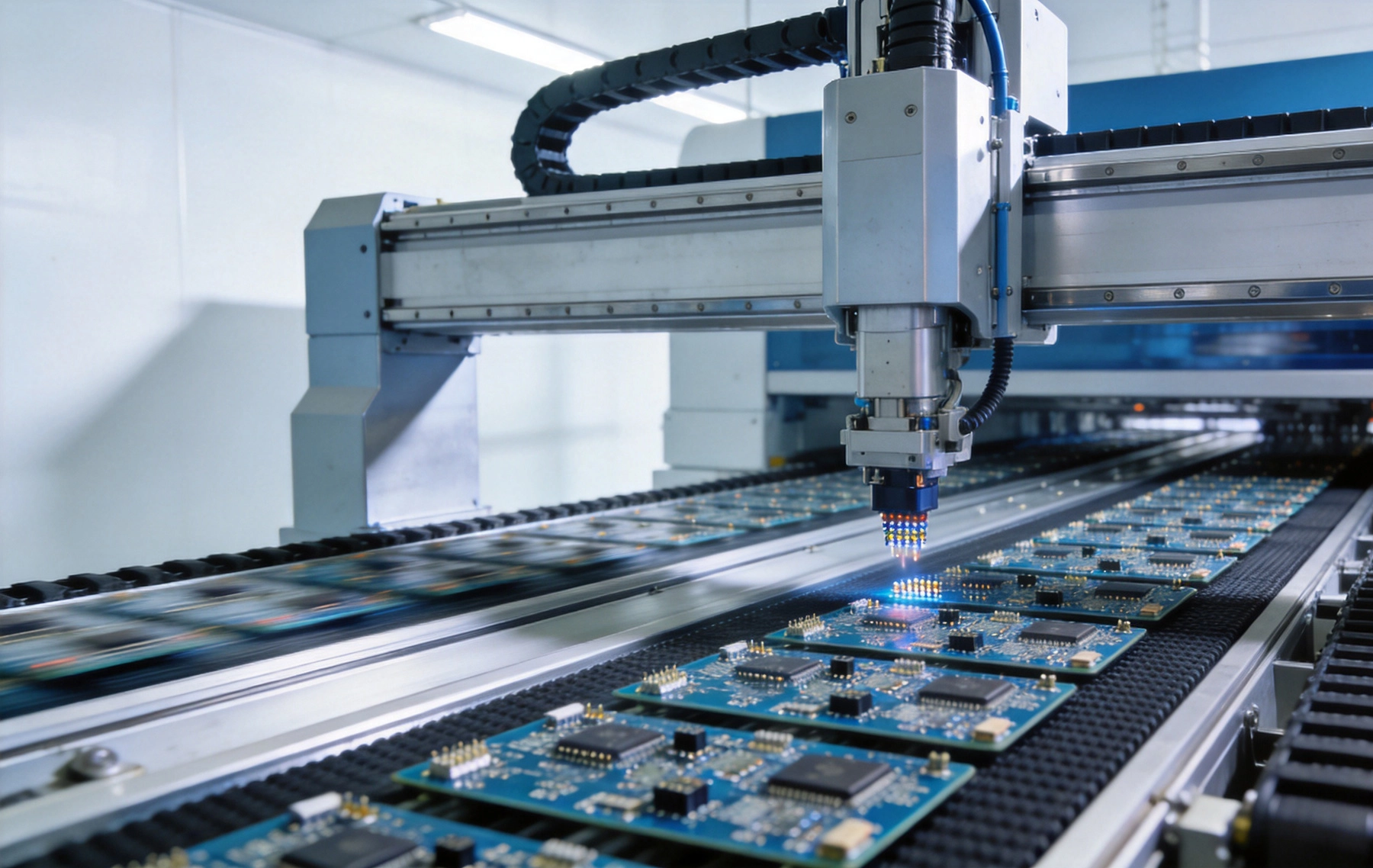
Here is the uncomfortable truth about prototypes: they can hide problems. When you're building or ordering five boards, every parameter gets individual attention. The assembly technician might manually adjust reflow profiles for each board. The engineer reviewing solder joints has time to check each one. Defects get caught before they ship.
Mass production doesn't work that way. At scale, you're relying on statistical process control rather than individual inspection. A design that's marginal at prototype quantities will almost certainly fail at production volumes—not because the design is bad, but because the tolerance stack-ups compound.
Consider Thermal Management. A prototype might dissipate heat adequately because the surrounding air circulation in a lab environment differs from the enclosed chassis where the production unit will actually operate. What worked on your bench might cook itself in the field.
If you're serious about moving to production, Design For Manufacturability (Dfm) review isn't optional—it's essential. This review examines your design through the lens of what a manufacturing facility can actually produce consistently.
Some common Dfm red flags that cause prototype-to-production headaches include trace widths that are technically possible but yield poorly, via sizes that work on prototypes but experience barrel fill issues at scale, and pad geometries that look fine on paper but create paste deposition problems during assembly.
A proper Dfm Analysis should happen before you finalize your prototype design, not after you've already locked in your layout. Many engineers treat DFM as a production-phase activity, which means they're fixing problems at the most expensive possible point in the development cycle.
Component choice matters more than most designers realize until they hit production. A part that's datasheet-perfect might have manufacturing quirks that only surface at scale. Some components come in incompatible lead-free versus leaded variants. Others have moisture sensitivity level ratings that require different handling procedures during assembly.
When evaluating components for production-readiness, consider whether the part has multiple qualified sources or just a single manufacturer. Check if the component has a history of supply chain volatility. Verify that the landing pattern you've designed matches the manufacturer's recommended pad geometry—not just the generic footprint in your EDA library.
It also helps to understand your assembly partner's equipment capabilities. A facility running 01005 components daily will place them more reliably than one that only handles them occasionally. Matching your design complexity to your manufacturer's strengths eliminates unnecessary yield loss.
Here's something that catches many teams off guard: the documentation that worked for prototypes is almost never sufficient for production. Your prototype build might have relied on verbal instructions, hand-written notes, or assumptions that were never explicitly documented.
Production requires precision. A bill of materials needs manufacturer part numbers, not just generic descriptions. Assembly drawings need to specify tolerances, inspection criteria, and critical parameters. Test procedures need to be repeatable and unambiguous.
One common issue is the "works on my board" problem. When a prototype passes testing, the conditions under which it passed often aren't fully captured. Was the ambient temperature controlled? What specific test equipment was used? Were there environmental factors that aren't obvious? Production testing needs to account for these variables explicitly.
Not all contract manufacturers are created equal. The shop that built your prototypes might not be the right choice for high-volume production, and vice versa. Prototype facilities often prioritize flexibility and quick turnaround over the process discipline needed for consistent production runs.
When evaluating manufacturing partners for production, look beyond their marketing materials. Ask about their process documentation practices. Request data on their historical yield rates for similar board complexity. Find out how they handle non-conforming material—because at production volumes, you will get some.
A quality manufacturer will push back on your design if they identify potential issues. This resistance is a feature, not a problem. The best manufacturing relationships are collaborative. They bring expertise in production optimization that complements your design knowledge.
Before committing to full production, run a pilot batch. This isn't just a smaller version of your production order—it's a deliberate learning exercise. The goal is to identify and resolve issues before they become expensive problems.
A typical pilot run might be 50 to 200 units, depending on your production volume. During this phase, you should be tracking first-pass yield, collecting field failure data from any accelerated life testing, and documenting any deviations from expected process parameters.
Pay attention to the feedback from your assembly partner during the pilot. If they're asking questions about your design intent, that's a good sign—they're trying to understand the context. If they're silently building boards that don't match your expectations, you might not find out until you receive them.
Prototype costs and production costs follow different economics. A prototype run might cost $500 per board because you're paying for setup, engineering attention, and expedited handling. A production run might bring that down to $15 per board—but only if your design supports efficient manufacturing.
Hidden cost drivers often include: panel utilization (how many of your boards fit on a standard manufacturing panel), number of unique components (more part numbers mean more setup time), and production complexity (mixed technologies, Fine Pitch Components, and high layer counts all add expense).
Design choices that seem minor can have major cost implications. For example, specifying a non-standard board thickness might require dedicated tooling. Using components only available in small quantities might trigger price premiums or availability issues. These aren't abstract concerns—they translate directly to your per-unit cost.
Your prototype probably got individual inspection. Your production boards will get statistical sampling. This means your design needs to be robust enough to pass based on process capability rather than sorting.
Ipc Standards exist precisely to define acceptable quality levels for production. Class 1, Class 2, and Class 3 each represent different quality thresholds appropriate for different applications. Understanding which class applies to your product—and ensuring your design achieves it—is fundamental to production success.
Testing strategies also need to scale. Flying probe testing works fine for prototypes but becomes cost-prohibitive at volume. ICT (In-Circuit Test) requires test fixtures that represent real money. Functional test needs to be designed in from the beginning, not bolted on after the fact.
Moving from prototype to production isn't instant. Even with a well-prepared design, you should expect several weeks for initial qualification, pilot runs, and production ramp. Rushing this process is a common mistake that leads to quality problems.
A realistic timeline might look like this: Week one through two for Dfm Review and design finalization. Week three through four for first article production. Week five through six for pilot run and qualification testing. Week seven onward for production ramp.
The specific timeline depends on your design complexity, component availability, and quality requirements. Medical or aerospace products will have longer qualification cycles than consumer electronics. Complex multilayer boards need more process development than simple two-layer designs.
Finally, remember that you're establishing a long-term partnership, not just placing orders. The manufacturers who deliver consistent quality are the ones who understand your product, anticipate your needs, and communicate proactively about potential issues.
This relationship building pays dividends over time. A manufacturer who knows your products can optimize their processes for your specific requirements. They can flag potential component obsolescence before it becomes a crisis. They can accommodate rush orders when you need them.
The best production partnerships are built on mutual respect and clear communication. You bring product knowledge and market understanding. They bring manufacturing expertise and process optimization capabilities. Together, you can build something that scales.
For a well-prepared design, plan for eight to twelve weeks total. This includes DFM review, first article production, pilot runs, and production qualification. Complex designs or regulated products may require longer timelines.
Minimum order quantities vary by manufacturer and board complexity. Some facilities accept production runs as low as 5 to 25 units, while others require 100 or more. Panel utilization often drives the economics—smaller runs may have higher per-board costs.
Optimize your Design For Manufacturing efficiency: maximize panel utilization, reduce unique component counts, use standard specifications where possible, and avoid unnecessarily tight tolerances. Working with your manufacturer on Design Optimization often yields significant cost improvements.
Testing requirements depend on your product's end application and quality class. Common approaches include Aoi (Automated Optical Inspection), X-ray Inspection for BGA packages, ICT (In-Circuit Test), and functional testing. Your manufacturer can recommend appropriate testing strategies.
Look for alignment between your current needs and their core competencies. Prototype shops excel at flexibility and quick turns. Production facilities excel at consistent quality and cost optimization. Some manufacturers offer both capabilities, which can simplify your supply chain.
Contact us to discuss your requirements.
IoT Devices and the Demand for Compact, Low-Cost PCB PrototypesJuly/31/2026
Evaluating a China Multilayer PCB Manufacturer: Certifications and CapabilitiesSeptember/11/2026
PCB Prototype Pricing Models: Panelization and Setup Fees ExplainedAugust/12/2026
PCB Prototype Manufacturing in China: Complete GuideMay/18/2026

10 Questions to Ask Your Potential PCB Prototype Manufacturer in ChinaJuly/07/2026

How We Handle Intellectual Property Protection for Overseas ClientsOctober/19/2026
What is Heavy Copper PCB? Complete Guide from China ManufacturerMay/18/2026
Sustainability in PCB Fabrication: Eco-Friendly Materials and ProcessesJuly/01/2026