Open Nav

For hardware startups, the gap between a working prototype and Mass Production is often called the "valley of death"—and for good reason. 60% of promising hardware projects fail at this stage, derailed by unforeseen manufacturing issues, cost overruns, and missed launch windows. This is the story of how one industrial IoT startup overcame these challenges to scale from a single functional prototype to 10,000 production units in just 12 weeks, hitting their market launch target and securing $2.3M in follow-on funding.
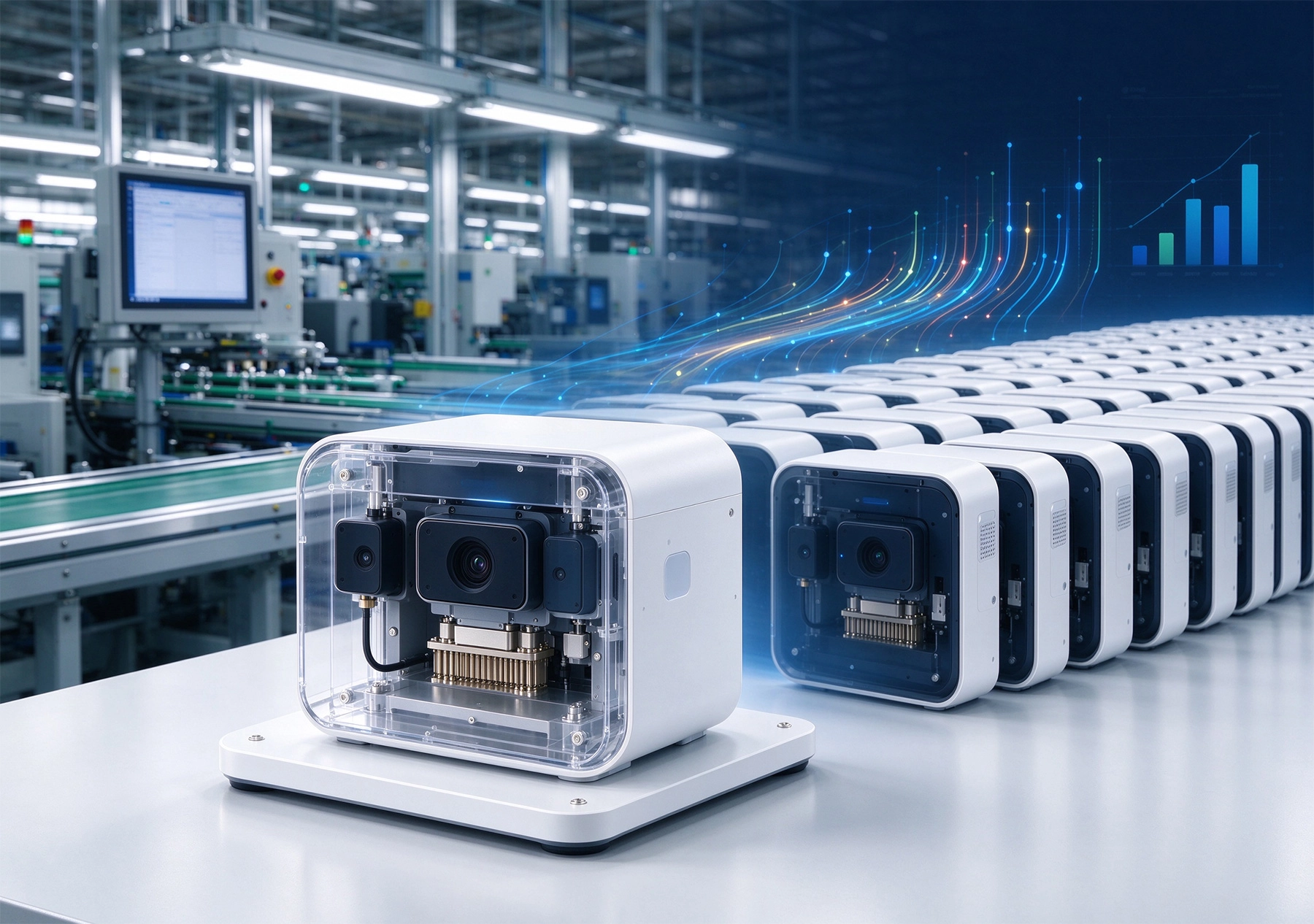
Our client, a venture-backed startup specializing in wireless environmental monitoring sensors for industrial facilities, had already proven their product market fit. Their prototype device, which tracks temperature, humidity, and air quality in manufacturing plants, had won 7 pilot contracts with Fortune 500 manufacturing clients after a successful demo at a major industry trade show. The only problem? They had 90 days to deliver 10,000 units to fulfill their pilot commitments—and their existing Prototype Manufacturing partner could only produce 50 units per month at a cost that was 4x their target production price.
Their engineering team had spent 18 months perfecting the product's functionality, but had not optimized the design for mass manufacturing. Key issues included:
When they reached out to us, their leadership team was facing a tough choice: delay their launch by 6 months to fix the issues themselves, or lose their key client contracts and risk shutting down the company.
We assigned a dedicated engineering and project management team to the client, with a single clear goal: deliver 10,000 fully tested, compliant units in 12 weeks or less at their target cost point. Our process followed three structured phases:
Our manufacturing engineering team completed a full Design For Manufacturing (Dfm) audit of their Pcb Design within 48 hours of receiving the files. We identified 17 specific design changes that would reduce production cost, improve yield, and shorten lead times without impacting product performance:
We also worked with their compliance team to prepare all required documentation for Ipc-a-610 Class 2 certification, CE marking, and FCC Part 15 compliance, eliminating potential delays in the certification process.
Once the optimized design was approved by the client's engineering team, we ran a pilot production run of 100 units to validate the Manufacturing Process. This pilot run included:
The pilot run achieved a 98.7% first-pass yield, exceeding the client's expectations. We identified only 2 minor process adjustments needed before scaling to full production, which we implemented within 3 business days. The client's engineering team signed off on the production units, and we moved forward to the full production phase.
We scaled production gradually to ensure consistent quality as volume increased:
Throughout the production process, we implemented a rigorous Quality Assurance framework that included:
We delivered the full 10,000 unit order 3 days ahead of the 12-week deadline, with a final production yield of 99.2%. The key business outcomes for the client included:
The Dfm optimizations reduced the total per-unit production cost by 32% compared to their original prototype cost, allowing them to hit their target gross margin of 58% on the pilot deployments. Over the first year of production, these cost savings will total more than $450,000 for the client.
By delivering the units 3 days ahead of schedule, the client was able to deploy their sensors to their 7 enterprise clients 1 week earlier than promised, resulting in $1.2M in initial revenue and positive references that helped them secure an additional 12 enterprise clients in the following quarter.
The 99.2% production yield meant less than 80 units required rework, and field failure rates in the first 6 months of deployment were just 0.3%—well below the industry average of 2.1% for similar industrial IoT devices. This high reliability helped the client secure a 3-year exclusive supply contract with their largest enterprise customer.
The successful launch allowed the client to close a $2.3M Series A extension funding round, with investors citing the successful production ramp as a key factor in their investment decision. The company has since scaled their production to 50,000 units per year with our team, and we continue to support their new product development efforts.
"When we first came to [our team], we were 90 days away from missing our launch window and potentially losing everything we had worked for over the past two years," said the company's CEO. "Their engineering team didn't just manufacture our product—they partnered with us to fix our design issues, reduce our costs, and build a scalable production process that we could rely on. We wouldn't be where we are today without their expertise and commitment to our success."
This success story highlights three critical lessons for any hardware startup looking to scale from prototype to mass production:
Whether you're still in the prototype stage or ready to ramp up to mass production, our team has the expertise and capabilities to help you navigate the Manufacturing Process successfully. We specialize in supporting hardware startups with flexible production volumes, end-to-end engineering support, and rigorous Quality Control.
Contact us to discuss your requirements.

How We Handle Intellectual Property Protection for Overseas ClientsOctober/19/2026
Evaluating a China Multilayer PCB Manufacturer: Certifications and CapabilitiesSeptember/11/2026
Bridging the Gap: Moving from PCB Prototype to Mass ProductionOctober/09/2026
10 Questions to Ask Your Potential PCB Prototype Manufacturer in ChinaJuly/07/2026
IoT Devices and the Demand for Compact, Low-Cost PCB PrototypesJuly/31/2026
PCB Prototype Pricing Models: Panelization and Setup Fees ExplainedAugust/12/2026
PCB Prototype Manufacturing in China: Complete GuideMay/18/2026
Sustainability in PCB Fabrication: Eco-Friendly Materials and ProcessesJuly/01/2026