Open Nav

When your product roadmap depends on multilayer PCBs for medical devices, automotive systems, or industrial equipment, the stakes are high. A single manufacturing defect can cascade into field failures, warranty claims, and damaged brand reputation. That's why evaluating a China Multilayer Pcb manufacturer requires more than just comparing unit prices. You need to understand their certifications, production capabilities, Quality Control processes, and the systems they have in place to catch problems before boards ship.
This guide walks through the key factors to consider when vetting potential manufacturing partners in China. We will cover industry certifications, technical capabilities, facility audits, and the questions you should be asking before committing to a production run.
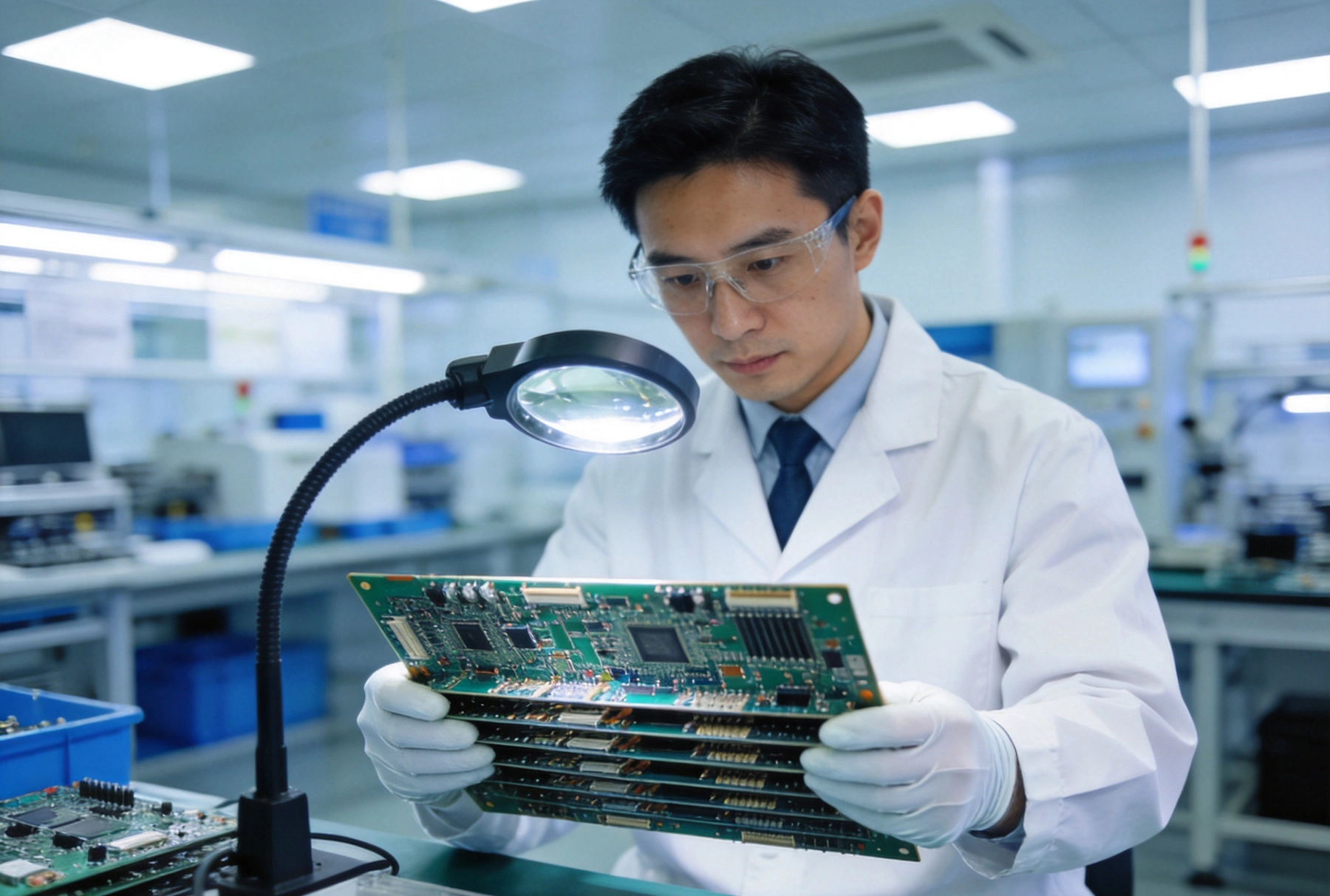
Certifications serve as a baseline for Quality Assurance. They tell you that a manufacturer has established documented processes, maintains equipment calibration schedules, and trains their operators to consistent standards. Without certifications, you are essentially gambling that the factory's "best effort" will match your expectations.
In the PCB industry, certifications also impact your own compliance posture. If you are building products for the European Union, automotive customers, or medical markets, your Contract Manufacturer must meet specific standards. Using an uncertified supplier can disqualify your product from certification or expose your company to liability.
Iso 9001 is the foundation of Quality Management. It requires manufacturers to document their processes, implement corrective action procedures, and conduct regular internal audits. For a China Multilayer Pcb manufacturer, holding Iso 9001 certification indicates that they have a structured approach to quality.
However, ISO 9001 is not a guarantee of technical competence. It confirms that processes exist and are followed. You still need to evaluate whether those processes are appropriate for multilayer Pcb Production specifically.
IPC (Institute for Printed Circuits) standards are the technical backbone of Pcb Manufacturing. They define acceptance criteria, test methods, and design requirements that the entire industry recognizes. When evaluating a China multilayer PCB manufacturer, you want to confirm they work to applicable Ipc Standards.
The most relevant Ipc Standards include:
A reputable manufacturer should be able to produce boards meeting IPC-6012 Class 3 requirements, which is the highest acceptance level for products where continued performance or reliability is critical.
If you are targeting automotive applications, Iatf 16949 is essential. This standard builds on ISO 9001 with automotive-specific requirements including defect prevention, scrap reduction, and traceability systems. Many automotive OEMs and Tier 1 suppliers will only work with IATF-certified manufacturers.
Ask to see the IATF certificate and verify its validity through the IATF database. Some factories claim certification but have let it lapse or operate facilities not covered by their certificate.
For medical device applications, Iso 13485 demonstrates that the manufacturer has a Quality Management system designed for medical device production. This includes additional controls around documentation, traceability, and process validation.
Medical-grade Pcb Manufacturing typically requires tighter tolerances, specific material selections (such as low-CTE laminates), and more rigorous testing protocols. Confirm that the manufacturer's Iso 13485 scope covers multilayer Pcb Production specifically.
Iso 14001 indicates that the manufacturer has an environmental management system in place. This is particularly relevant in China, where environmental regulations are increasingly strict. A manufacturer with Iso 14001 is more likely to handle waste processing, chemical handling, and energy consumption responsibly.
While not management system certifications, RoHS (Restriction of Hazardous Substances) and REACH compliance are critical for products sold in the European Union and many other markets. Confirm that the manufacturer can provide materials declarations and certificates of conformance for all restricted substances.
Multilayer PCBs range from simple 4-layer boards to complex 20+ layer designs with blind and Buried Vias. Assess your current and future requirements and verify that the manufacturer can handle them.
Key questions include:
Request sample boards from the manufacturer to verify that their stated capabilities match their actual output. This is one of the most valuable steps in the evaluation process.
Standard FR-4 works for many applications, but advanced products often require specialized materials. A capable China multilayer PCB manufacturer should offer access to:
If your design requires specific materials, confirm availability and lead times before committing to production.
Some manufacturers specialize in quick-turn prototyping while others focus on high-volume production. Understand where a potential partner falls on this spectrum. A factory optimized for 10,000+ unit runs may not be the best fit for a 100-unit prototype order, and vice versa.
Ask about:
Certifications establish the framework, but execution determines quality. Evaluate the manufacturer's Quality Control infrastructure.
High-quality manufacturers inspect incoming laminate and prepreg materials to verify they meet specifications. This catches material defects before they become board failures. Ask about their incoming inspection protocols and whether they maintain certificates of analysis for materials.
Multilayer PCB manufacturing involves many steps where defects can be introduced. Look for manufacturers that implement inspection at critical process points, including:
Every board should undergo electrical testing before shipping. Ask about their test methods:
For regulated industries, traceability is non-negotiable. Confirm that the manufacturer can provide:
Certifications and documentation only tell part of the story. Whenever possible, conduct a virtual or in-person facility audit. This lets you verify:
Many manufacturers now offer virtual factory tours via video conferencing. If an in-person audit is not feasible, a virtual tour with specific documentation requests can still provide valuable insight.
A technically capable manufacturer with poor communication can create significant problems. Evaluate how they handle:
Responsive communication is especially important during new product introduction, where design issues often surface during initial production runs.
Several warning signs should prompt additional scrutiny:
Once you have selected a China multilayer PCB manufacturer, invest in the relationship. Regular communication, clear specifications, and early engagement on design issues lead to better outcomes than treating every order as a transactional exchange.
Consider conducting periodic facility audits, even after qualification. Manufacturing capabilities and quality systems evolve, and ongoing verification ensures continued compliance.
Evaluating a China multilayer PCB manufacturer requires a systematic approach. Start with certifications as your baseline, then dig into technical capabilities, quality control processes, and communication practices. Request samples, conduct audits, and verify claims before committing to production.
The effort you invest in the qualification process pays dividends throughout your product lifecycle. A reliable manufacturing partner reduces quality issues, shortens lead times, and gives you confidence that your boards will perform as specified in the field.
ISO 9001:2015 provides the foundational quality management framework, but for PCB-specific assurance, IPC-6012 compliance is equally important. For specific industries, Iatf 16949 (automotive) or ISO 13485 (medical) may be mandatory.
Request copies of certificates and verify them through official databases. For ISO certifications, check the certification body's directory. For IATF 16949, use the IATF database. Schedule audits to verify that certified processes are actually being followed.
Class 2 focuses on dedicated service products where continuous performance is expected but not critical. Class 3 covers high-performance/harsh environment boards where continued performance or performance on demand is critical. Most medical, automotive, and aerospace applications require Class 3 compliance.
Capabilities must meet your technical requirements first. A cheaper manufacturer that cannot produce boards to your specifications is a false economy. Once you have shortlisted manufacturers that meet your technical needs, then evaluate cost, lead time, and relationship factors.
Request enough samples to conduct statistically meaningful testing. For qualification, typically 3-5 boards per design variant allows you to verify basic functionality and quality. For critical applications, consider larger sample sizes and extended Environmental Testing.
At minimum, request Certificate of Conformance, material certificates, electrical test data, and inspection reports. For regulated industries, add process travelers, first article inspection reports, and traceability documentation.
PCB Prototype Manufacturing in China: Complete GuideMay/18/2026
PCB Prototype Pricing Models: Panelization and Setup Fees ExplainedAugust/12/2026
IoT Devices and the Demand for Compact, Low-Cost PCB PrototypesJuly/31/2026
Bridging the Gap: Moving from PCB Prototype to Mass ProductionOctober/09/2026

How We Handle Intellectual Property Protection for Overseas ClientsOctober/19/2026

10 Questions to Ask Your Potential PCB Prototype Manufacturer in ChinaJuly/07/2026

HDI PCB Manufacturing Process: Step-by-Step ExplanationMay/13/2026

BGA Assembly Challenges: X-Ray Inspection and Voiding IssuesSeptember/17/2026