Open Nav

When you're developing a new electronic product, the last thing you need is pressure to order 500 or 1,000 PCBs before you've even validated your design. Yet that's exactly what most traditional PCB manufacturers demand. Minimum order quantities (MOQs) have long been a pain point for startups, hardware engineers, and product teams working on prototypes or small-batch productions. This article breaks down why MOQs exist, how to work around them, and what to look for in a manufacturer that supports flexible batch sizes.
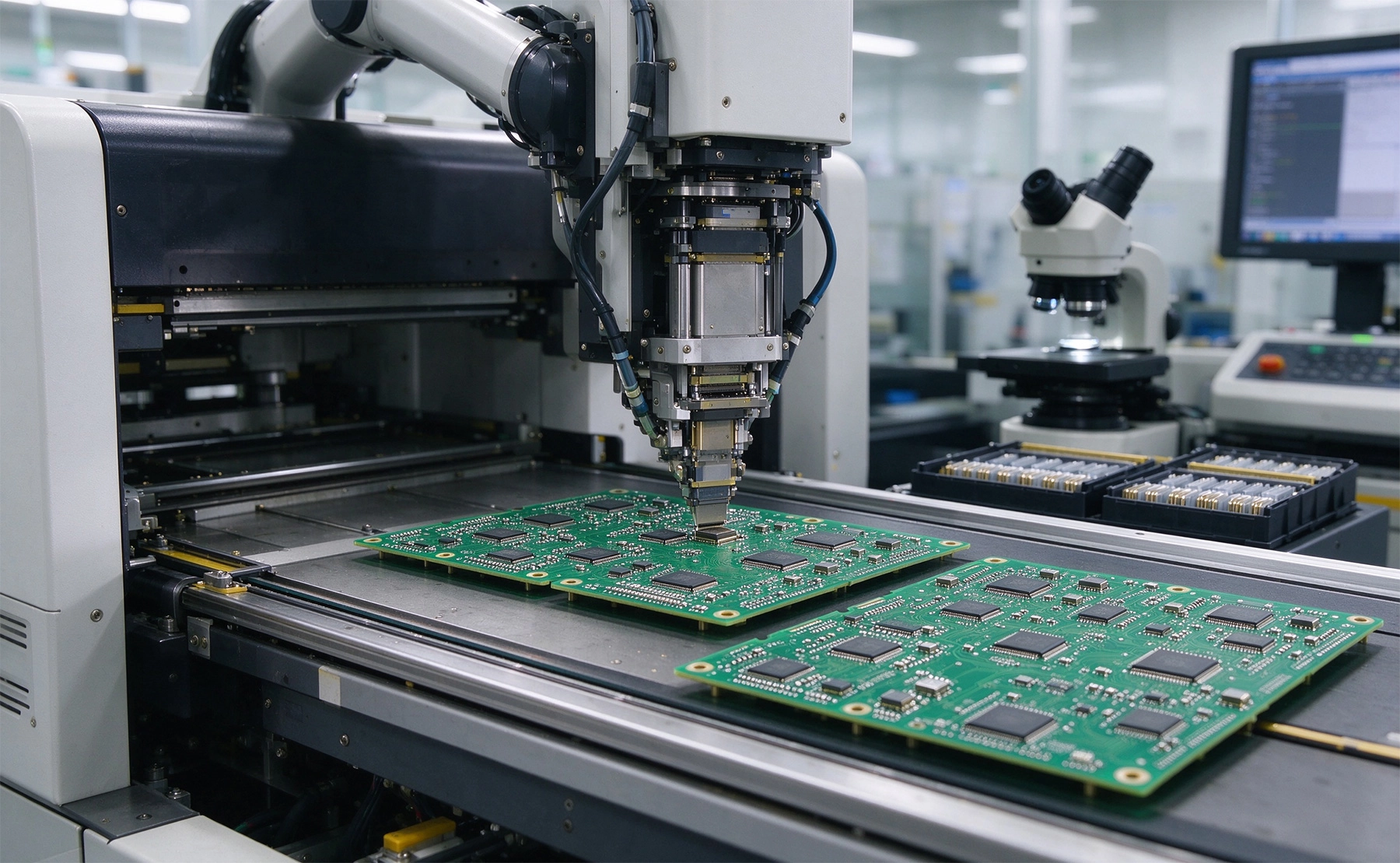
Let's be honest about this first. MOQs aren't arbitrary numbers pulled out of thin air. They exist because Pcb Manufacturing involves significant setup costs. When a manufacturer spins up a production line—loading reels of solder paste, configuring pick-and-place machines, running reflow ovens—they're making an investment regardless of whether they're building 10 boards or 1,000. The economics only make sense when the order size justifies the setup time.
For high-volume manufacturers focused on consumer electronics, this model works perfectly fine. They need thousands of identical boards to fill containers headed for retail shelves. But for anyone else—hardware hackers, IoT device makers, medical device developers, university research teams—MOQs can be a dealbreaker. You're forced to pay for boards you don't need, tie up capital in inventory, or abandon your project altogether.
The traditional logic goes something like this: higher volume equals lower per-unit cost. And that's technically true. But it ignores the real costs of overproduction: storage fees, component obsolescence, redesign expenses if a bug surfaces after you've already committed to 5,000 units. Sometimes the cheapest batch is the one you didn't have to overorder.
Industry standards vary, but here's what you're likely to encounter:
These numbers feel reasonable until you need just five prototype boards to test a concept. Then they feel like a wall.
Some manufacturers specifically target the prototype and low-volume market. They've structured their operations to handle small batches efficiently—shorter production runs, shared panels, and faster turnarounds. These shops typically don't advertise MOQs because their business model depends on flexibility.
Look for keywords like "Prototype Pcb," "low-volume manufacturing," or "on-demand assembly" when searching. Many Chinese Manufacturers have developed prototyping divisions specifically for this market, offering quantities as low as 1 to 5 units without significant per-unit penalties.
Platforms that aggregate manufacturing capacity have changed the landscape. These services let you upload your Gerber files, select components from their inventory, and order exactly the quantity you need—sometimes starting at a single board. They handle the logistics, Quality Control, and shipping, so you don't have to negotiate with a factory rep who wants to upsell you to a larger order.
The trade-off? You might pay more per board compared to a high-volume order, and your component selection is limited to what's in their inventory. But for prototypes and early-stage products, the flexibility usually wins.
Here's a tactic that works in some communities: group purchasing. If you're building a board based on a popular reference design or using common components, you might find other engineers willing to share a panel. You each get your boards, the manufacturer gets a larger order that justifies setup, and everyone saves money.
This approach requires coordination and trust—you're all shipping to one location, then redistributing boards. It works better in established hardware communities or through organized group buys than it does for one-off projects.
Don't assume the listed MOQ is set in stone. Some manufacturers will waive or reduce minimums if you demonstrate long-term potential. If you're planning to ramp up to larger volumes once your product launches, say so. A manufacturer who believes you'll order 10,000 units in six months might accept a small initial order to build the relationship.
Be realistic though. Don't promise volume you can't deliver—manufacturers have long memories, and burning a bridge early can hurt you later when you actually need that capacity.
If you've already got bare boards fabricated elsewhere (perhaps from a low-MOQ fab house), you can often find assembly shops willing to work with smaller quantities. You're splitting the supply chain, which adds complexity, but it gives you more control over batch sizes at each stage.
Flexibility comes with caveats. Before you celebrate finding a no-MOQ manufacturer, consider these potential pitfalls:
Some manufacturers advertise low or no minimums but make up the difference with Setup Fees, engineering review charges, or premium pricing on components. Always get a full quote before committing. Ask specifically about: tooling or fixture fees, engineering change order costs, expedited service charges, and component markup compared to digikey/mouser pricing.
High-volume manufacturers have refined processes that produce extremely consistent boards. When you're ordering in small batches, you might encounter more variation between units—especially on fine-pitch components, BGA packages, or multilayer boards. Ask about their Quality Control procedures for low-volume orders. Do they perform Aoi (Automated Optical Inspection) on every board? What about X-ray Inspection for hidden solder joints?
Turnkey Assembly services maintain inventory, but they can't stock every component. If your design uses obscure parts, specialty ICs, or components from secondary sources, you might hit roadblocks. Some services allow you to ship your own components (consignment), but this introduces its own complications around quantity matching and quality verification.
Small-batch or prototype orders don't always ship faster. Some manufacturers batch small orders together, which can actually extend lead times compared to a dedicated high-volume run. If timing matters for your project, clarify expected lead times upfront.
It's worth stepping back and asking whether avoiding MOQs is always the right move. Here's the honest calculation:
In this scenario, the no-MOQ service wins financially. But what if your actual need is 90 boards? Now you're paying $2,250 for no-MOQ assembly versus $720 for the MOQ option. The math changes fast.
Calculate your true break-even point before assuming flexibility is always cheaper. And remember to factor in the cost of capital—what will you do with $720 tied up in inventory you don't immediately need?
Some sectors have embraced small-batch manufacturing more than others:
Before committing to a manufacturer for small-batch work, get clear answers on these points:
MOQs exist for legitimate economic reasons, but they don't have to be a barrier to getting your boards built. The manufacturing landscape has evolved significantly, with more options than ever for engineers and product teams who need flexibility. Prototyping services, online assembly platforms, and manufacturers specifically built for low-volume work have democratized access to quality Pcb Assembly.
The key is understanding your true needs—not just the boards for today, but your roadmap for the next six to twelve months. Sometimes paying a premium per board for a small batch makes perfect sense. Other times, negotiating a reasonable MOQ and planning your inventory strategically saves money in the long run.
Whatever path you choose, don't let minimum order quantities lock you into a manufacturing relationship that doesn't serve your project. The right partner—one who understands prototype and low-volume work—can be as important as the board design itself.
Minimum order quantities vary by manufacturer. Some prototyping services accept orders as low as 1 to 5 units, while traditional manufacturers may require 25, 50, or more. Online assembly platforms typically offer the most flexibility, with quantities starting at a single board.
High MOQs exist because PCB assembly involves fixed setup costs—equipment preparation, tooling, and labor—that don't scale with order size. Manufacturers offset these costs by requiring larger orders where the per-unit economics make sense.
Generally, yes. Per-unit costs for small batches are typically higher than for high-volume orders due to setup costs being distributed across fewer boards. However, the total cost may still be lower if you avoid paying for inventory you don't need.
Many manufacturers offer consignment options where you provide the components. This can help avoid MOQ restrictions related to component sourcing, though you'll need to ensure you supply the correct quantities (including waste/spare parts) and that components meet quality standards.
Search for "Prototype PCB Assembly," "low-volume Pcb Manufacturing," or "on-demand PCB assembly." Online platforms that aggregate manufacturing capacity often advertise low or no minimums. Always verify complete pricing, including any setup fees, before ordering.
Contact us to discuss your requirements.
Top 10 DFM Mistakes to Avoid Before Sending Files to China for SMT AssemblyJuly/15/2026

BGA Assembly Challenges: X-Ray Inspection and Voiding IssuesSeptember/17/2026
SMT PCB Assembly China: A Complete Guide for Global BuyersMay/18/2026
Thru-Hole vs. SMT: Choosing the Right Assembly TechnologyJuly/28/2026

The Rise of Flexible PCBs in Foldable Phone HingesJuly/14/2026
Designing for SMT: Pad Sizes, Spacing, and OrientationJuly/12/2026
What to Look for in a Reliable SMT PCB Assembly Partner in ChinaAugust/10/2026
The Complete Guide to SMT PCB Assembly in ChinaJune/17/2026