Open Nav

Every hardware startup and research team faces the same painful reality: you need 5 boards, maybe 25, to validate a design before committing to a full production run. The big contract manufacturers are not interested in that volume, the pricing is calibrated for scale, and the lead times are built for predictability, not speed. You end up either overpaying for slow-turn prototypes or gambling on low-cost services that deliver boards you cannot trust.
Low volume Pcb Manufacturing exists specifically to solve this gap. Understanding how it works, where the cost structure actually comes from, and how to structure your first orders will save your team weeks of iteration time and thousands of dollars in the process.

The term gets used loosely, so it helps to set boundaries. In practical terms, low volume Pcb Manufacturing typically covers runs from 1 to 200 panels per order. Below 5 panels, you are firmly in prototype territory where pricing is dominated by setup costs. Between 5 and 50 panels, you enter a sweet spot where per-board costs start to flatten as the manufacturer can share setup overhead across more units. Above 50 panels, you are approaching the economics of medium-volume production, and the pricing conversation changes entirely.
The reason this distinction matters is that low volume manufacturing is not simply "production at a smaller scale." It requires a fundamentally different operational model from the manufacturer: flexible scheduling, modular tooling, and a quoting process that does not penalize small orders with arbitrary minimums. Not every PCB fab is set up for this. Many factories in China and elsewhere optimize their lines for high throughput, which means they are expensive and slow for small runs because they are running your boards as a low-priority interruption to their main production flow.
Understanding the cost structure is the single most important thing a startup or R&D team can do before placing their first low-volume order. PCB manufacturing has two broad categories of cost: setup costs and per-panel costs.
Setup costs are incurred once per production run, regardless of quantity. They include engineering review and Dfm feedback, panel tooling and test fixture preparation, lamination press setup, solder mask and legend application, and electrical testing. For a standard 4-layer board, these setup costs can easily represent $300 to $800 of your total bill. For a complex 8-layer board with Controlled Impedance, they can exceed $1,500. This is why ordering 1 board and ordering 10 boards often costs nearly the same — the setup cost is amortized only slightly across a few more units.
Per-panel costs scale roughly linearly with quantity. These include raw material (substrate, copper, prepreg), processing time on each machine step, labor for inspection and test, and packaging. As your panel quantity increases, the per-panel cost drops toward the manufacturer's true variable cost.
The practical implication is that your goal in low volume manufacturing is not necessarily to minimize your per-board cost on the first run — it is to get enough boards at a price you can afford to validate your design so that your next order, for a slightly larger quantity, goes smoothly. The worst outcome is ordering the cheapest possible 5 boards, finding a layout problem in testing, and having to pay the full setup cost again for a revised batch.
One of the most effective strategies for stretching a low volume order is Panelization — fitting multiple designs or multiple copies of the same design into a single production panel. Most manufacturers offer a standard panel size, typically 18 by 24 inches or 21 by 24 inches. If your board is 5 by 5 centimeters, you can fit 16 copies into a single panel. The manufacturer processes this as one panel, with one setup, and you receive 16 boards for roughly the price of one setup plus a modest per-unit markup.
Panelization is not just about multiplying copies of the same board. You can also panelize different designs into one panel if you have multiple projects at the same production stage. Many manufacturers offer "combined panel" pricing for this, where you share the panel with other customers' designs. This is common in prototype services and can cut your per-board cost dramatically.
There are limits. The designs must share compatible surface finish, solder mask color, and stack-up requirements. Your manufacturer will have design rules for routing and spacing between boards on the panel. Panelized boards also need mouse bites or V-scoring to separate them cleanly after assembly. If your manufacturer provides Dfm feedback, they will flag any panelization issues before production.
Material selection has an outsized impact on low volume pricing because material pricing scales with the size of the panel and the specific laminate type, not just the number of boards. Standard FR-4 (typically 170–180 °C Tg) is the most economical choice for most low volume runs. It handles standard lead-free reflow profiles without issue and is widely stocked by manufacturers.
High-Tg FR-4 (220–250 °C Tg) costs more and is justified when your board will see elevated operating temperatures or when you need better thermal stability during assembly. For most startup and R&D applications, standard FR-4 is sufficient until you have a specific reason to upgrade.
For RF or high-speed digital designs in the low volume context, the material decision is more nuanced. Rogers and PTFE laminates are expensive and often come with minimum order quantities or surcharges for small panel runs. If you need RF performance, it is worth specifying the exact material grade and requesting a quote that accounts for the actual material lot size, rather than being surprised by a surcharge after the quote is issued.
A practical tip: do not over-specify material for a prototype. A board you are using to validate layout and functionality does not need the same material grade as a board destined for production. Use a less expensive material for validation runs and switch to the production-grade laminate only when the design is locked.
Surface finish is another area where low volume orders can carry disproportionate cost if you are not deliberate. Hasl (Hot Air Solder Leveling) is the least expensive finish and works well for through-hole and standard SMT assemblies. It is the default for most budget prototype services. The tradeoff is a relatively uneven surface that can be problematic for fine-pitch BGA components.
Enig (Electroless Nickel Immersion Gold) provides a flat, uniform surface ideal for fine-pitch components and is the standard for most high-density designs. It costs more per panel but is often worth it for boards with BGA or QFN packages with pitch below 0.5 mm. For low volume runs, Enig typically adds $20 to $60 per panel on top of the base price.
Osp (Organic Solderability Preservative) is an intermediate option: flat surface, lower cost than ENIG, but with a limited shelf life and incompatibility with multiple reflow cycles. It works well for assemblies that will go through one or two reflow passes and be used or assembled within a few months.
For most R&D and startup prototype boards, the recommendation is straightforward: use Hasl for through-hole boards and legacy packages, switch to ENIG when you have fine-pitch components, and avoid Osp unless you have a specific reason to choose it.
One of the strongest arguments for using a manufacturer that specializes in low volume production is lead time. A standard production quote from a high-volume manufacturer might promise 15 to 25 working days. A prototype or low volume service can often deliver in 3 to 7 working days, sometimes faster with a rush fee.
The actual lead time for a low volume order breaks down into several components. Engineering review and DFM feedback typically takes 4 to 24 hours, depending on the complexity and the manufacturer's queue. Manufacturing processing time varies by layer count: 2-layer boards might take 24 to 48 hours on the line; 4-layer boards, 48 to 72 hours; 6+ layer boards, 72 to 96 hours. Electrical testing and inspection adds another 4 to 8 hours. Shipping time varies by method: express courier (2–4 days), standard air freight (5–10 days), or sea freight (3–4 weeks for non-urgent orders).
For a typical 4-layer prototype board ordered from China with standard shipping, a realistic lead time is 10 to 14 calendar days from order confirmation to arrival at your door. With express shipping, you can cut this to 7 to 9 days. If your project has a hard deadline, build in at least 2 to 3 days of buffer for potential DFM revisions or production holdbacks.
For startups and R&D teams working with a new design, the most valuable service a low volume manufacturer provides is not necessarily the boards themselves — it is the Design For Manufacturing feedback before production. A good manufacturer reviewing your gerbers will catch issues that would cause problems in production: trace geometries that are too fine for the specified tolerance, via sizes with aspect ratios that risk voiding, insufficient annular ring, pad sizes that do not match the expected component footprint, and clearance violations for the assembly process.
This feedback is most valuable on the first run. Catching a problem in DFM is a $200 revision. Catching it after you have assembled and tested 25 boards is a full re-order plus the assembly cost on the failed units. Ask your manufacturer what their DFM process looks like, how they communicate it, and how long it takes. Manufacturers who treat DFM as an add-on or a paid service are not the right partners for a startup or research environment where iteration speed matters.
Component availability is a challenge that scales with volume. For a 5-board prototype run, you need only a handful of each component — but those components must be available in the exact packages and grades you specified, and the manufacturer must be able to source them reliably enough to build your boards without substitution.
Turnkey services handle component procurement on your behalf, which removes a significant logistical burden. The trade-off is that component pricing for low volume procurement is not competitive with what you would pay at scale. Distributors like DigiKey and Mouser have minimum order fees and handling charges that make small-quantity component buys expensive. The manufacturer typically buys from their own inventory or from aggregator sources and passes the cost through.
A practical approach for startups is to split the responsibility: have the manufacturer source standard passives and commonly stocked ICs, while you procure specialized or expensive components yourself and ship them to the factory for assembly. This requires clear communication and logistics coordination, but it can reduce cost significantly on components where you have access to better pricing.
For R&D teams, component preservation is also a consideration. Low volume builds that use expensive ICs or limited-availability parts benefit from having a sourcing strategy that includes buying a small surplus for future revisions, given that component obsolescence and price fluctuations in the semiconductor market can make identical parts unavailable or dramatically more expensive 6 months later.
Knowing when to transition from low volume prototype runs to a production-scale order is a critical decision for startups. The transition too early and you lock in a design that has not been fully validated. Transition too late and you have burned time and money on iterative low volume runs that could have been consolidated.
The right trigger is a combination of factors: your design has passed functional and Environmental Testing in at least two board revisions, you have a confirmed or highly probable order book that justifies the production tooling investment, your component choices have been validated against availability and lead time at production volumes, and your manufacturer has confirmed they can scale from your current panel quantity to a higher quantity without a change in process or materials.
Before scaling, do a Cost Analysis that accounts for not just the per-board price but the NRE (non-recurring engineering) costs that come with the first production run: production tooling, test fixture build-out, first article inspection, and any design updates needed to prepare for volume. For a well-prepared design, these costs are manageable. For a design with unresolved issues, they become expensive rework.
Not all manufacturers that accept low volume orders are good at it. The difference between a manufacturer that is set up for low volume and one that merely tolerates it shows up in three areas: responsiveness, flexibility, and honesty about limitations.
A manufacturer set up for low volume will assign your order to a line or queue that is designed for small, mixed batches. They will review your files and return DFM feedback within 24 hours. They will quote you based on your actual panel utilization rather than a flat minimum fee. And they will tell you when your design requires a capability they do not have — rather than accepting the order and delivering boards that fail to meet your requirements.
Ask specific questions before placing an order: What is their minimum order quantity and minimum dollar value? What are their standard lead times for your layer count and material? Do they include DFM feedback in the base price? What testing do they perform on low volume orders — flying probe, bed-of-nails, or visual inspection only? Do they panelize multiple designs on one panel, and how does that affect pricing?
The answers to these questions will tell you a great deal about whether the manufacturer understands the low volume business or is simply running your small order as an afterthought.
If your development cycle requires multiple low volume runs — which is common for hardware startups iterating through several board revisions — there are strategies to reduce cumulative cost over time. Standardize your panel size and stack-up across projects where possible. A consistent 4-layer stack using standard FR-4 with ENIG finish means your manufacturer can reuse tooling and process settings, reducing setup time and cost on each subsequent order.
Bundle multiple designs into a single order when you have concurrent projects at similar stages. This is the most direct way to reduce per-board cost without changing your design methodology. Many manufacturers offer discounts for combined orders or for placing blanket orders with scheduled deliveries.
Build a relationship with one or two manufacturers rather than shopping the lowest quote on every order. Manufacturers who know your team, your typical design complexity, and your quality requirements can move faster, catch more issues in DFM, and often give preferential treatment on lead times and pricing to established accounts. The time you spend negotiating a small price difference on a single order is often better spent building a reliable supply relationship.
Finally, invest in design discipline. Every DFM issue that is caught and corrected before production saves more than the cost of the revision — it saves the engineering time spent debugging boards that failed for preventable reasons. A clean, well-documented design file set that your manufacturer can review quickly pays dividends on every order.
Low Volume Pcb Manufacturing is a distinct service category with its own economics, lead time structure, and operational model. The most important things to understand are the setup cost dominance in small runs, the panelization leverage available to stretch each order, and the value of DFM feedback before you commit to production.
Choose a manufacturing partner based on their responsiveness and process fit for small runs, not just their per-board price. The cost of a missed deadline or a board that fails because of a preventable manufacturing issue far exceeds any savings from a marginally cheaper quote. Build the relationship, standardize your processes, and treat each low volume run as a step toward production rather than an isolated transaction.
Contact us to discuss your requirements.

Why Low Volume PCB Manufacturing is Crucial for Agile Hardware DevelopmentOctober/16/2026

Speeding Up Product Development with Fast PCB Prototype ServicesJuly/27/2026

The Logistics of Fast Shipping: Getting Your PCBs from China QuicklySeptember/16/2026
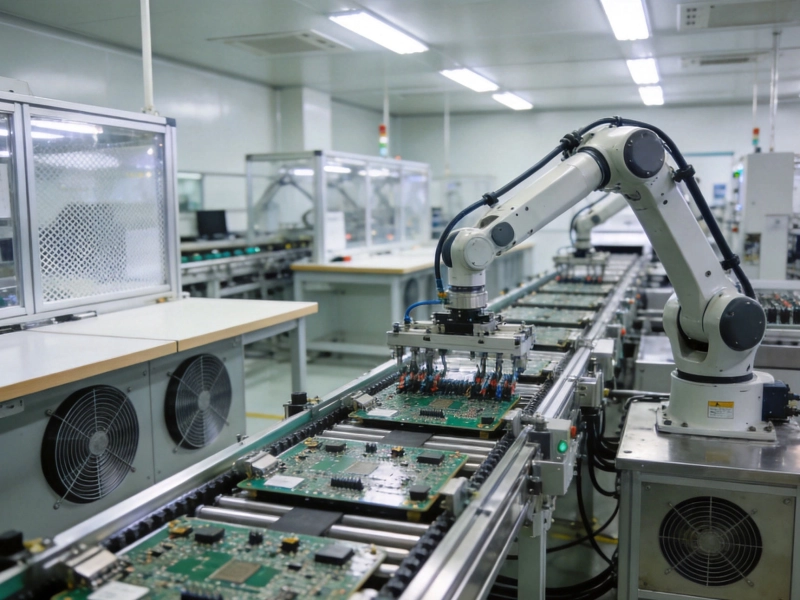
From Gerber to Delivery: How We Achieve 24-Hour PCB PrototypingJuly/09/2026
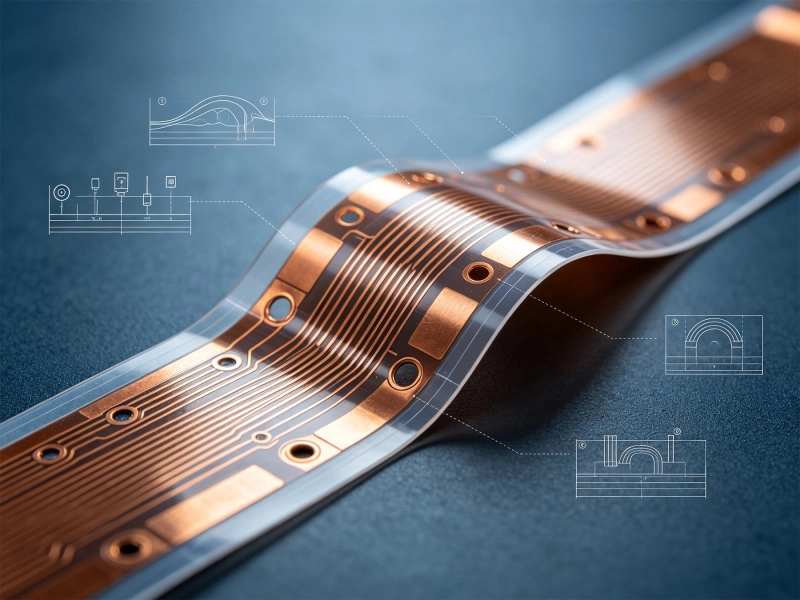
How to Prevent Common Failures in Flexible Circuit DesignSeptember/09/2026

Controlled Impedance Testing: Ensuring Performance in High-Speed BoardsOctober/15/2026
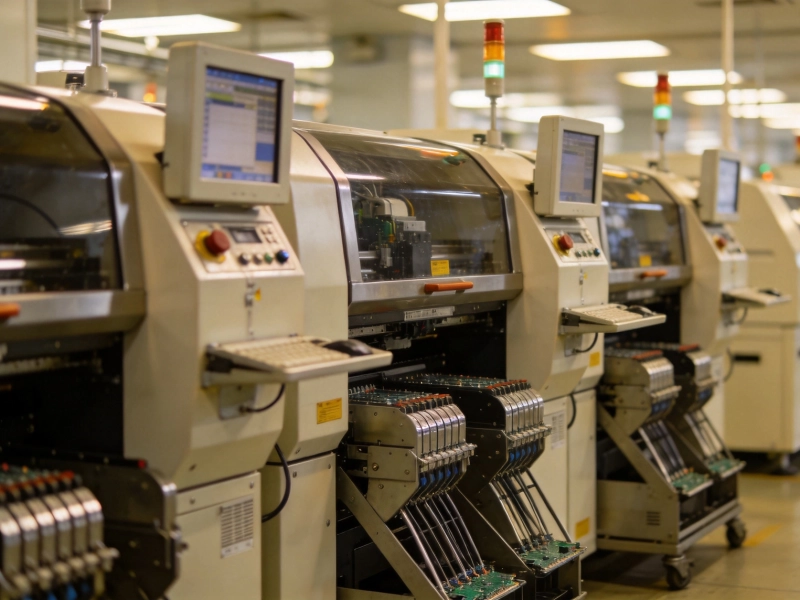
Turnkey PCB Assembly: Simplifying Your Supply Chain with One VendorOctober/10/2026

How We Handle Intellectual Property Protection for Overseas ClientsOctober/19/2026