Open Nav

Thermal Management remains the critical factor that determines whether your LED design achieves 50,000 hours of operation or fails within the first year. When junction temperatures rise just 10°C above rated maximums, LED lifespan drops by roughly 50 percent. This reality makes substrate selection one of the most consequential decisions in any LED lighting project.
Standard FR-4 circuit boards with their thermal conductivity of approximately 0.3 W/m·K simply cannot move heat away from high-power LED components efficiently enough to ensure reliable long-term operation. Aluminum PCBs, by contrast, deliver thermal conductivity values ranging from 1 to 8 W/m·K, with premium configurations reaching even higher performance levels. The difference becomes immediately apparent in any application where LEDs operate at wattages exceeding one watt per component.
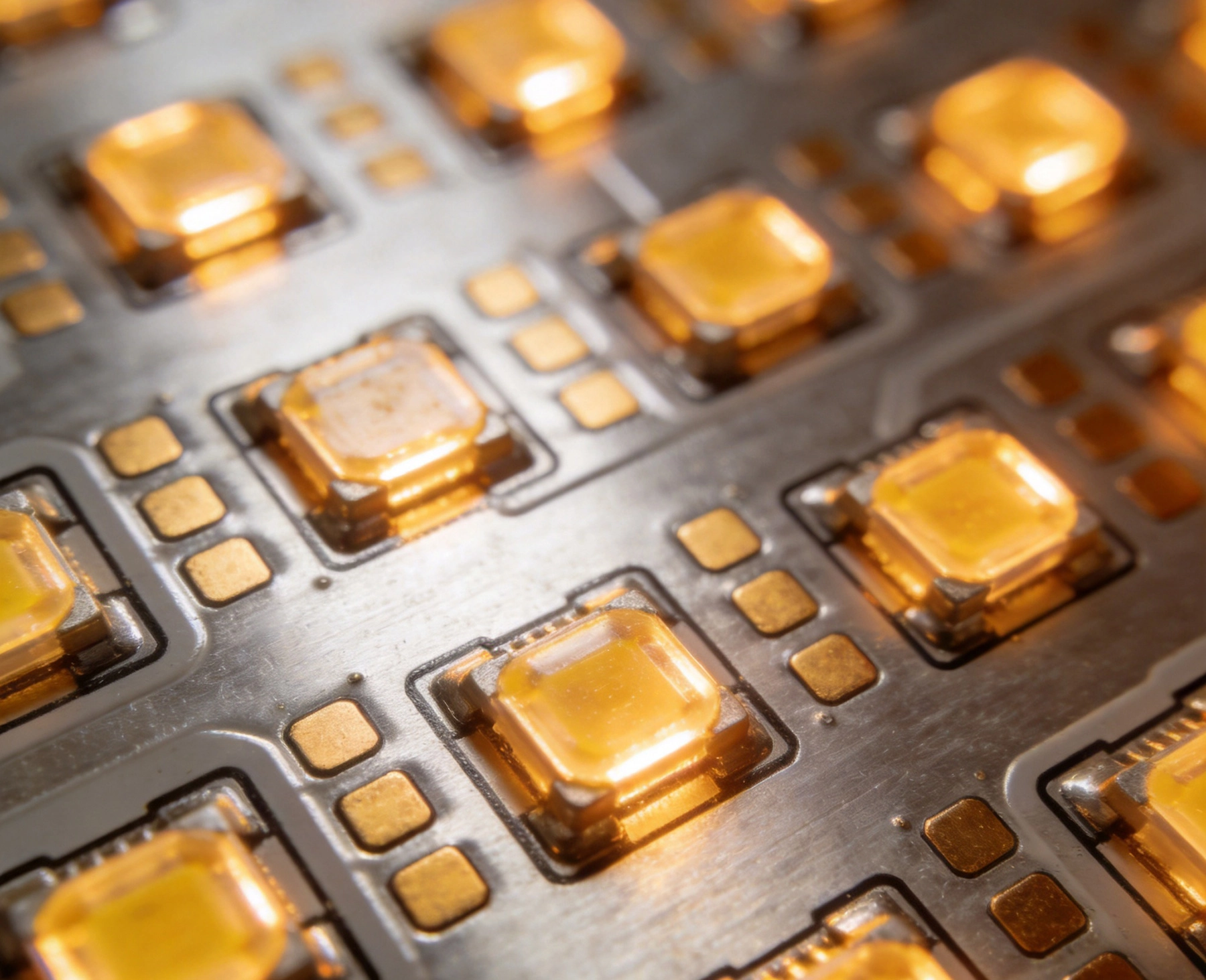
An Aluminum Pcb, also called a Metal Core Pcb (Mcpcb), differs fundamentally from conventional FR-4 boards in its construction and thermal behavior. The typical Aluminum Pcb structure consists of three distinct layers working together to manage heat effectively.
The base layer consists of an aluminum alloy substrate, commonly using 5052 or 6061 grade aluminum. This metal core provides the primary thermal spreading function, drawing heat away from the LED components and distributing it across a larger surface area. The aluminum substrate typically comprises approximately 50 to 67 percent of the total board thickness, providing substantial thermal mass.
A dielectric insulation layer sits between the aluminum core and the copper circuitry. This layer, usually made from thermally conductive epoxy formulations filled with ceramic particles, provides electrical isolation while still allowing heat transfer. The thermal resistance of this dielectric layer often represents the primary bottleneck in aluminum PCB thermal performance, which is why material selection and processing parameters matter significantly.
The copper circuit layer carries both electrical current and serves as a thermal transfer path to the underlying dielectric. Copper traces can be designed with thermal pads and thermal vias to enhance heat flow from LED components through to the aluminum core. Modern LED PCB designs frequently incorporate thermal vias beneath LED landing pads, creating direct thermal pathways that significantly improve Heat Dissipation.
When an LED operates, approximately 75 to 85 percent of electrical energy converts to heat rather than light. For a 10-watt LED module, this means 7.5 to 8.5 watts of heat must be removed continuously during operation. The junction temperature of the LED die directly impacts both luminous output efficiency and component lifespan.
Consider a practical scenario comparing FR-4 and aluminum PCB approaches for a 50-watt LED array. With FR-4 substrate and thermal vias, the temperature rise from junction to ambient might exceed 80°C, pushing junction temperatures well above safe operating limits even with active cooling. Using aluminum Pcb Technology, the same 50-watt array might achieve temperature rises of only 25 to 35°C, maintaining junction temperatures comfortably within specifications.
This thermal margin translates directly into operational benefits. LEDs operating 20°C cooler than alternatives can expect approximately double the operational lifespan. They also maintain higher luminous efficacy, since LED efficiency drops as temperature increases. The result is both longer-lasting and more energy-efficient lighting installations.
While aluminum PCBs add cost compared to standard FR-4 boards, certain applications make their use not just beneficial but necessary for project success.
High-bay LED fixtures used in warehouses, factories, and large retail spaces typically operate at 100 watts or more per fixture. These installations require reliability measured in years rather than months, with maintenance cycles that make component replacement costly. Aluminum PCBs provide the thermal margin necessary for decade-plus operational lifespans in these demanding environments.
LED street lights, area lights, and parking garage fixtures must handle variable ambient temperatures ranging from bitter cold winter conditions to extreme summer heat. Aluminum PCBs provide consistent thermal performance across this temperature range, ensuring LEDs operate within specification regardless of external conditions. The thermal mass of the aluminum substrate also helps buffer short-term thermal transients from switching or environmental changes.
Automotive headlamps, taillights, and interior lighting must meet stringent reliability requirements while operating in engine compartment thermal environments. Aluminum PCBs deliver the thermal performance and mechanical stability required for automotive qualification standards including AEC-Q101 testing.
LED grow lights for indoor farming often operate continuously for 16 to 24 hours per day at high power levels. This demanding duty cycle makes Thermal Management critical, as even small temperature reductions compound over thousands of operating hours. Aluminum PCBs enable the sustained high-power operation that commercial horticulture applications require.
LED downlights and recessed ceiling fixtures often operate in thermally confined spaces with limited airflow. The thermal spreading capability of aluminum PCBs allows these fixtures to operate safely in insulated ceiling cavities where airflow is restricted, opening design possibilities that would not exist with conventional substrates.
Successfully implementing aluminum PCBs in LED designs requires attention to several factors beyond standard Pcb Design practices.
The thermal conductivity of the dielectric layer determines overall aluminum PCB thermal performance. Standard thermally conductive dielectric materials offer approximately 1.0 to 2.0 W/m·K thermal conductivity. For higher-power applications, premium dielectric formulations can achieve 3.0 to 8.0 W/m·K, enabling more compact designs or higher power densities. However, these high-performance dielectrics often come with trade-offs in other properties such as flexibility, processing temperature, or cost.
Thermal vias placed directly beneath LED thermal pads dramatically improve heat transfer from the component to the aluminum core. Via design parameters including diameter, pitch, plating thickness, and fill materials all influence thermal resistance. Blind or buried thermal vias can further optimize thermal paths when design constraints allow more complex stackups.
Aluminum substrate thickness typically ranges from 0.8mm for thin, lightweight applications up to 3.0mm or thicker for high thermal mass requirements. Thicker aluminum provides better thermal spreading but adds weight and material cost. The optimal thickness depends on power density, available mounting surface area, and thermal environment constraints.
In some applications, combining aluminum core rigid sections with Flexible Circuit sections offers design advantages. These hybrid constructions allow LED arrays to be mounted on thermally optimized aluminum sections while routing flexibility accommodates mechanical packaging constraints. However, the interface between rigid aluminum and flexible sections requires careful design attention to ensure long-term reliability.
Aluminum PCBs typically cost two to five times more than equivalent FR-4 boards depending on specifications and volume. This premium reflects both material costs and the specialized processing required for metal core fabrication. However, the Total Cost Of Ownership often favors aluminum PCBs when accounting for factors beyond initial board cost.
Reduced warranty claims and field failures represent significant potential savings, particularly for commercial and industrial lighting installations where service calls carry substantial costs. Higher LED efficacy at cooler operating temperatures translates to energy savings over the product lifetime. Additionally, aluminum PCBs can enable smaller, lighter fixture designs through improved power density, potentially offsetting some material premium through mechanical Design Optimization.
Aluminum PCB Fabrication requires different equipment and process parameters than standard Pcb Manufacturing. The aluminum core must be properly prepared, including surface treatment to ensure dielectric adhesion. Processing temperatures and handling procedures differ from FR-4 processing due to aluminum's different thermal and mechanical properties.
When selecting a manufacturer for aluminum PCB LED applications, verify their experience with metal core technology and thermal management requirements. Ask about their dielectric material options, minimum thermal via capabilities, and Quality Control procedures specific to thermal performance. Some manufacturers offer thermal simulation or testing services that can help optimize designs before full production.
Prototype quantities often require different pricing structures than production volumes for aluminum PCBs. Finding a manufacturer capable of efficiently handling both prototype and production requirements can streamline development cycles and reduce qualification costs when transitioning from design to volume production.
Aluminum PCBs have become essential technology for reliable LED lighting across nearly all applications above approximately five watts per component. The thermal management advantages they provide directly translate into longer product lifespans, higher luminous output, and more consistent performance over time.
For engineers and product designers working on LED projects, substrate selection should receive the same careful attention as LED component selection. The performance gap between aluminum PCBs and conventional FR-4 materials continues to grow as LED power densities increase and application requirements become more demanding.
Whether you are developing high-bay fixtures for industrial facilities, designing next-generation street lighting, or creating innovative horticultural grow systems, aluminum Pcb Technology provides the thermal foundation necessary for project success. Contact us to discuss your requirements and explore how Metal Core Pcb technology can optimize your LED lighting design.
Case Study: Solving a Complex Thermal Issue with a Metal Core PCBOctober/12/2026
What is Metal Core PCB? Complete Guide from China ManufacturerMay/18/2026
Heavy Copper PCB Etching: Challenges, Tolerances, and Precision SolutionsSeptember/10/2026
Implantable Medical Devices: Precision and Reliability in PCB ManufacturingSeptember/24/2026
ISO and UL Certifications: What They Mean for Your PCB QualitySeptember/26/2026
Top 5 Applications of HDI PCBs in Modern ElectronicsMay/13/2026

The Future of PCB Manufacturing in China: Trends for 2026 and BeyondMay/19/2026
Sourcing Metal Core PCBs for Automotive LED HeadlightsJuly/25/2026