Open Nav

In the competitive world of Electronics Manufacturing, the temptation to cut costs wherever possible is ever-present. Printed circuit boards — the backbone of virtually every electronic device — are a common target for budget optimization. After all, a PCB looks like a simple piece of fiberglass and copper. How much difference can quality really make?
The answer, as countless engineers, product managers, and startup founders have learned the hard way, is: a massive difference. What appears to be an upfront saving often evolves into a cascade of failures, rework cycles, reputational damage, and warranty claims that far outweigh any initial discount. This article breaks down the hidden costs of cheap PCBs and explains exactly why PCB quality should never be treated as a variable to compromise.
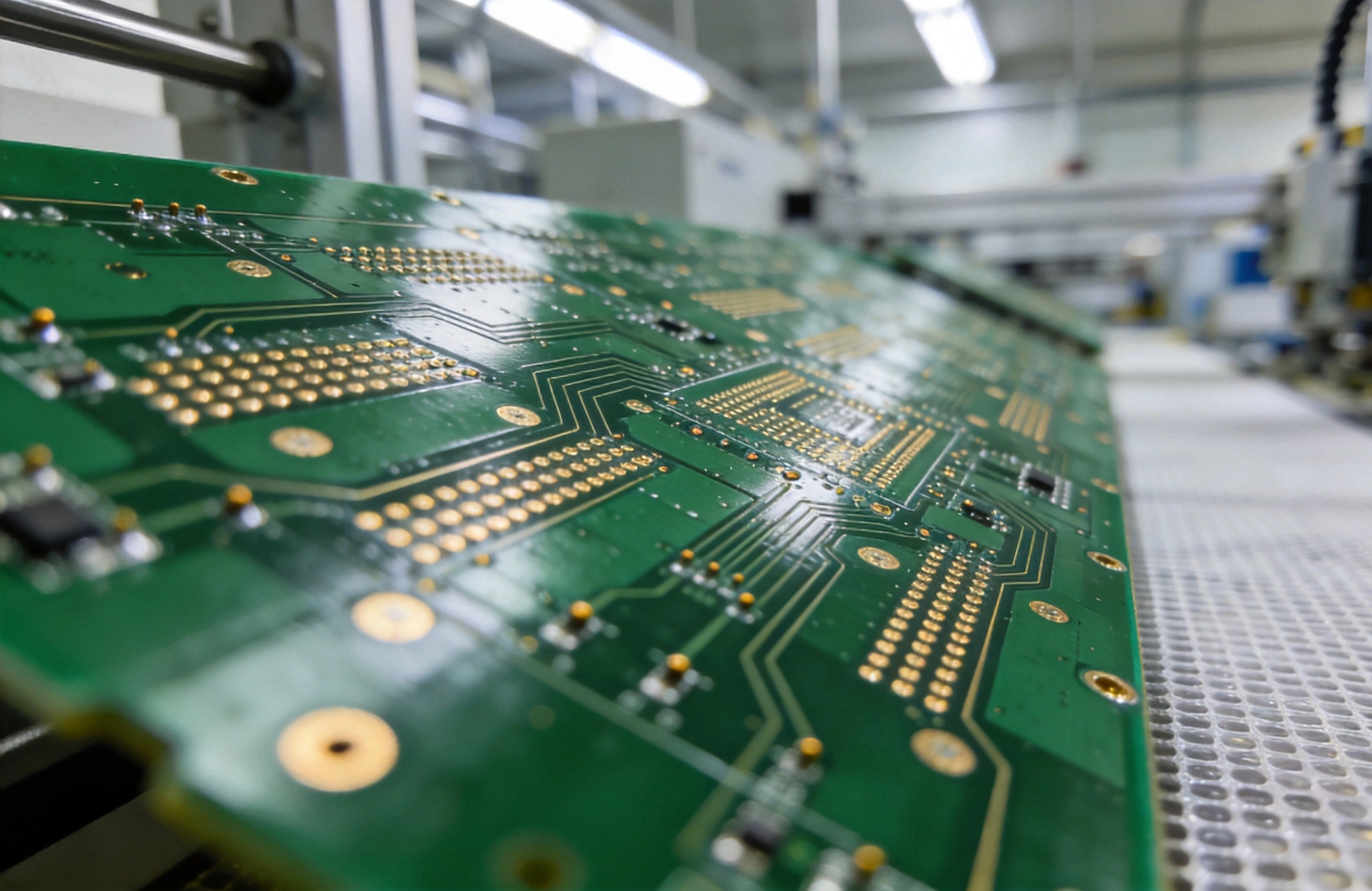
Before diving into costs, it helps to understand what "cheap" actually means in the context of PCBs. A low price tag can result from several factors:
None of these shortcuts are visible on a spec sheet that only lists board dimensions and layer count. That's precisely what makes them so dangerous — the failure is in what you can't see until it's too late.
A PCB that fails in a consumer's hands is not just a warranty claim. It is a cascade of consequences that multiplies in cost with every passing hour:
When a board fails after a product ships, you are on the hook for the replacement cost, shipping, and handling. For high-volume consumer electronics, this can represent millions of dollars in returns. Even for lower-volume industrial equipment, a single field failure can cost 10 to 50 times the original board price when you factor in logistics and administration.
A single viral failure story — a phone that catches fire, a medical device that malfunctions, an automotive system that cuts out — can erase years of brand equity. Rebuilding trust with customers takes far longer than the months it took to earn it. In regulated industries like medical or Automotive Electronics, a failure can trigger regulatory scrutiny, mandatory recalls, and in extreme cases, legal liability that threatens the company's existence.
Customers who experience a failure don't just return the product — they tell others. In the age of online reviews and social media, a cluster of failures can tank ratings overnight, costing far more in lost sales than the original PCB savings ever represented.
Cheap PCBs frequently arrive with defects that aren't caught until assembly. Common issues include:
Each of these defects halts the production line. Engineering teams spend hours diagnosing the root cause, procurement scrambles for replacement boards, and the entire production schedule slips. For a startup racing to launch a product before a competitor, these delays can mean the difference between market leadership and irrelevance.
High-frequency circuits, Power Electronics, and thermally demanding applications are particularly sensitive to PCB material quality. Cheap substrates with poor glass transition temperatures (Tg) can delaminate when exposed to elevated operating temperatures. Thin copper traces increase impedance and generate excess heat, leading to premature failure in power delivery networks.
In RF applications, dielectric constant variations in low-grade materials cause Signal Integrity problems — a board that worked perfectly in the lab fails in production due to inconsistent material properties. The debugging time and redesign costs for these issues can easily reach tens of thousands of dollars.
Experienced procurement engineers use Total Cost of Ownership (TCO) analysis to evaluate PCB suppliers. This framework accounts for:
When all these factors are included, the math often shifts dramatically. A board that costs 20% less upfront may carry a 200% cost premium over its lifetime compared to a quality-manufactured alternative. Companies that have survived major recalls or field failures universally recommend building TCO models before selecting a PCB supplier.
Understanding what separates quality boards from cheap ones helps buyers make informed decisions:
Quality manufacturers stock a range of base materials from certified suppliers — standard FR-4 for general use, high-Tg FR-4 for elevated temperature environments, polyimide for flex and aerospace applications, and Rogers laminates for RF and microwave designs. Material datasheets should be available and traceable to lot numbers.
After fabrication, every board should go through Aoi to catch shorts, opens, and registration errors. Flying probe testing checks electrical continuity across all nets without requiring a custom test fixture. These steps add cost per board but catch defects before they reach assembly or, worse, the field.
The IPC (Association Connecting Electronics Industries) publishes widely recognized quality standards — IPC-A-600 for board acceptability, IPC-6012 for qualification and performance specifications, and IPC-7711/7721 for repair and rework. A manufacturer that adheres to these standards provides an objective quality benchmark rather than relying on subjective visual inspection alone.
UL-recognized PCB manufacturers have had their processes and materials tested by Underwriters Laboratories. The UL mark on a board indicates that the flame resistance and electrical performance of the substrate have been independently verified — a significant Quality Assurance signal for safety-critical applications.
Whether you are working with a boutique domestic manufacturer or a high-volume overseas partner, evaluate suppliers on more than unit price:
Cheap PCBs are cheap for a reason. Material shortcuts, skipped inspections, and minimal quality controls translate directly into risk that you inherit as the designer, manufacturer, or brand owner. The savings realized at the procurement stage are a rounding error compared to the potential costs of field failures, rework, missed market windows, and reputational damage.
Investing in quality Pcb Manufacturing is not about spending more — it is about spending wisely. A reliable board from a trusted supplier protects your product, your customers, and your business. In electronics, as in most things, you get what you pay for.
Start your quality-focused PCB project today. Request samples, demand documentation, and build a total cost of ownership model before you commit. The upfront effort is minimal compared to the cost of getting it wrong.
What is the minimum copper weight I should specify for most applications?
For standard digital and mixed-signal boards, 1 oz/ft² (35 µm) is the industry default. For power delivery or high-current applications, specify 2 oz/ft² or heavier and ensure the manufacturer accounts for thermal relief and current derating in the design rules.
How do I know if a budget PCB supplier is skipping quality inspections?
Ask for their test procedures and look for AOI reports, flying probe data, or electrical test logs bundled with each shipment. If a supplier cannot produce these documents or quotes a price so low that testing seems impossible, that is a warning sign.
Are expensive PCBs always better?
Not automatically. Price alone is not a quality indicator. Use IPC-600 inspection criteria and material traceability to evaluate boards objectively regardless of cost.
What is IPC Class 3, and do I need it?
IPC Class 3 covers boards intended for high-performance and high-reliability electronics, including medical and aerospace applications. Class 2 (general electronics) is sufficient for most consumer products. If your application has safety implications, specify Class 3 and confirm with your supplier.
How much does PCB quality affect production yield?
Field experience across industries suggests that switching from a low-cost, inspection-minimal supplier to a quality-focused manufacturer can improve first-pass yield from 70–80% to 95–98%. At scale, that gap represents a massive difference in total production cost and schedule reliability.
How DFM Analysis Saves You Money on Multilayer PCBsAugust/19/2026

Sustainability in PCB Fabrication: Eco-Friendly Materials and ProcessesJuly/01/2026
What is Rigid-Flex PCB? Complete Guide from China ManufacturerMay/18/2026
How to Prevent Common Failures in Flexible Circuit DesignSeptember/09/2026
Blind and Buried Vias: Enhancing Density in HDI PCBsSeptember/30/2026

Detailed Explanation of the Types, Materials, and Applications of Flexible Circuit Boards 101June/04/2026
Metal Core PCB (MCPCB) Basics: Aluminum vs. Copper SubstratesSeptember/29/2026
Wearable Health Monitors: The Importance of Biocompatible Flex PCBsSeptember/02/2026