Open Nav

When you are evaluating a PCB manufacturer, one of the first things you probably check is their list of certifications. Iso 9001, ISO 14001, Iatf 16949, UL 94 — these acronyms show up on nearly every supplier's website. But what do they actually guarantee about your boards? Understanding what each certification covers, how it is audited, and where its limits lie can help you make a more informed decision and avoid costly quality surprises down the line.
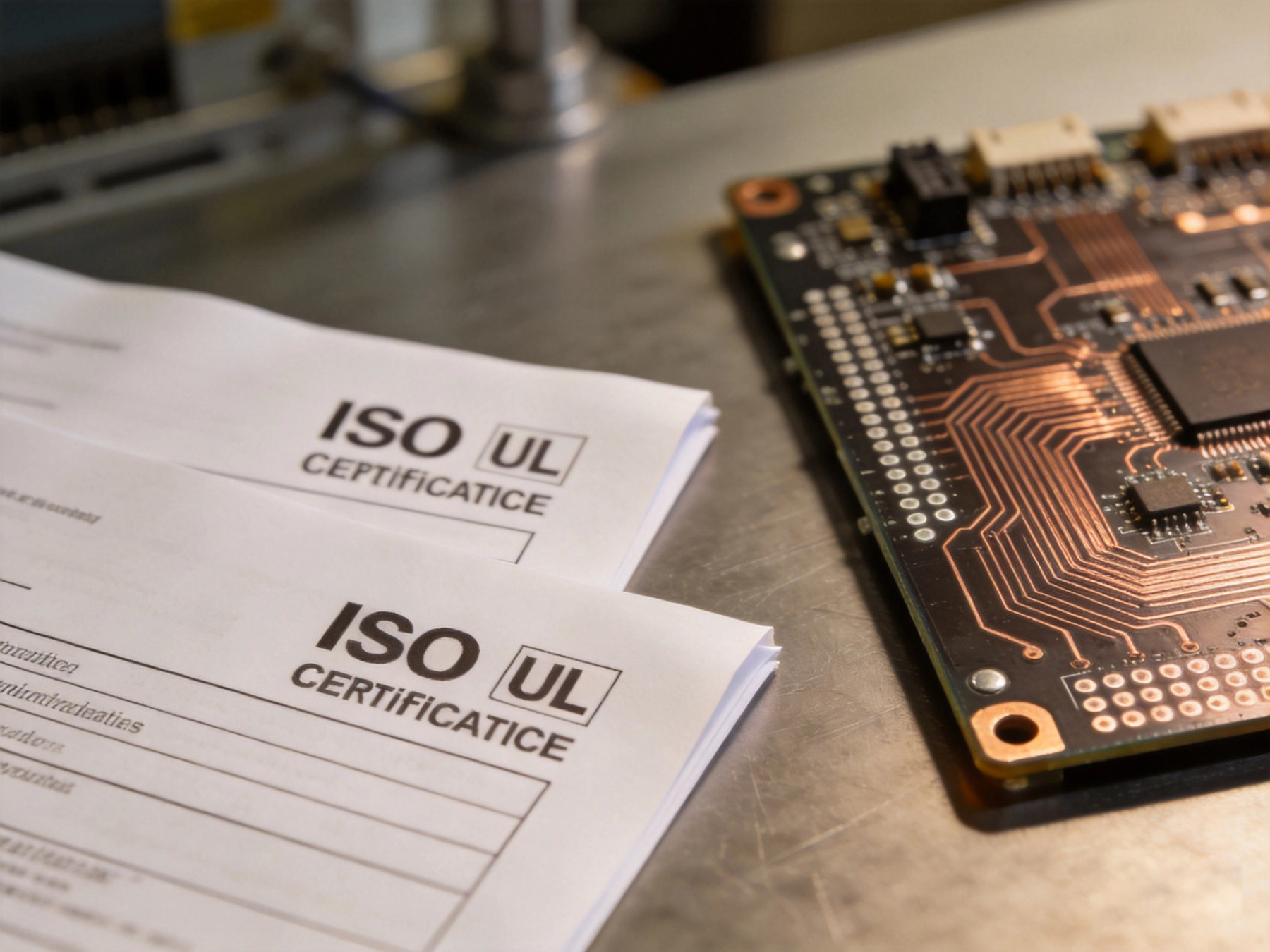
Certifications are not just marketing badges. They represent a formal, third-party verified commitment to specific processes, controls, and standards. For PCB Fabrication and assembly, this translates directly into fewer defects, more consistent yields, and better traceability. A certified manufacturer has invested time and resources into building systems that meet internationally recognized requirements, and those systems are periodically audited to ensure ongoing compliance.
Without certifications, you are essentially relying on a supplier's word that their processes are under control. With certifications, you have an independent assurance that specific quality, environmental, or safety management systems are in place and functioning. That difference can be critical when you are producing boards for medical devices, Automotive Electronics, aerospace systems, or any application where failure is not an option.
Iso 9001 is the most widely recognized Quality Management standard in the world. It defines the requirements for a Quality Management System (QMS) that ensures consistent product and service quality. For a PCB manufacturer, ISO 9001 certification means they have documented procedures for every critical process — from incoming material inspection to final outgoing Quality Control.
The standard is built around several core principles that directly impact Pcb Quality:
It is important to understand the limitations. ISO 9001 certifies the quality management system, not the product itself. A manufacturer can be ISO 9001 certified and still produce boards that do not meet your specific technical requirements. The standard ensures that processes are defined and followed, but it does not set specific technical thresholds for Copper Thickness, Impedance Tolerance, or solder joint reliability. You still need to define your acceptance criteria — typically through IPC-A-600 or Ipc-a-610 — and verify that the manufacturer can meet them.
ISO 14001 specifies requirements for an Environmental Management System (EMS). While it does not directly affect board quality, it has indirect quality implications that are worth understanding. A manufacturer with ISO 14001 certification has systems to control waste, manage chemical usage, reduce emissions, and comply with environmental regulations.
In Pcb Manufacturing, this matters because the fabrication process uses a significant volume of chemicals — etchants, plating solutions, cleaning agents, and flux residues. A factory with proper environmental controls is more likely to have well-maintained chemical processes, which directly impacts plating quality, etching precision, and surface cleanliness. Poor chemical management can lead to contaminated baths, inconsistent plating, and ionic contamination on finished boards — all of which degrade reliability.
ISO 14001 also signals that a manufacturer is committed to compliance with RoHS and REACH regulations, which restrict hazardous substances in electronics. If you are shipping products to the European Union or other regulated markets, working with an ISO 14001 certified supplier reduces your risk of non-compliance.
Iatf 16949 is the quality management standard specific to the automotive industry. It builds on ISO 9001 but adds requirements that are critical for Automotive Electronics, where zero-defect targets and strict traceability are non-negotiable. If your PCBs go into vehicles — whether for engine control units, ADAS sensors, infotainment systems, or EV battery management — IATF 16949 is the certification you should look for.
These tools create a much more rigorous quality framework than ISO 9001 alone. For PCB manufacturers serving the automotive sector, IATF 16949 means they have the processes in place to achieve the defect rates, traceability, and process stability that automotive OEMs demand.
Underwriters Laboratories (UL) certifications address product safety — specifically fire safety and electrical safety. For PCBs, the most relevant UL certifications involve flammability ratings and recognition of the laminate materials used in fabrication.
UL 94 is the standard for flammability of plastic materials. PCB laminates are classified by their ability to resist ignition and self-extinguish when exposed to a flame. The ratings you will see most often in PCB specifications are:
For industrial, medical, and consumer electronics that must pass safety audits, V-0 rated laminates are typically required. Using a manufacturer that sources UL 94 V-0 rated materials ensures that your boards meet the fire safety requirements of end-product standards.
UL 796 provides recognition for printed wiring board materials and constructions. When a PCB manufacturer has products listed under UL 796, it means the laminate systems — the combination of resin, glass fabric, and Copper Foil — have been tested and recognized by UL for their electrical and flammability properties. This recognition is important because it covers the actual material system as used in production, not just the raw laminate in isolation.
Some PCBs carry a UL mark directly on the board, indicating that the complete construction has been recognized. This is different from simply using UL-recognized laminate. A UL-recognized board means the entire stack-up — including the specific combination of prepreg, core, copper weights, and thicknesses — has been evaluated. If your end product requires UL listing, using UL-recognized boards simplifies your certification process significantly.
No single certification covers every aspect of Pcb Quality and safety. The most reliable manufacturers hold multiple certifications that complement each other:
When a manufacturer holds all of these certifications, you get a comprehensive assurance: the processes are controlled and continuously improved, the materials are safe and traceable, environmental risks are managed, and — for automotive applications — the statistical and analytical tools are in place to achieve near-zero defect rates.
Even valid certifications have limitations that buyers should be aware of:
Here is a checklist for moving beyond the certificate itself and assessing whether a manufacturer can deliver the quality you need:
ISO 9001 is a good starting point, but for medical devices, Iso 13485 (the medical device quality standard) is more appropriate. Some PCB manufacturers hold Iso 13485 in addition to ISO 9001. If they do not, you will need to verify that their quality system meets your regulatory requirements for Medical Device Manufacturing, including cleanroom standards and device traceability.
Certification audits occur every three years, with surveillance audits (partial audits) conducted annually. The certification body may also conduct unannounced audits if there is reason to suspect non-conformance. Between external audits, the manufacturer is required to perform internal audits at planned intervals.
Yes. The laminate material may carry a UL 94 V-0 rating, but the specific PCB construction built from that material may not have UL 796 recognition. If your end product requires a UL-recognized board, you need to verify UL 796 recognition for the specific construction, not just the V-0 rating of the raw laminate.
IATF 16949 incorporates all ISO 9001 requirements and adds automotive-specific requirements. A manufacturer certified to IATF 16949 automatically satisfies ISO 9001 as well. However, if the manufacturer serves both automotive and non-automotive customers, they may maintain separate ISO 9001 and IATF 16949 certifications for organizational clarity.
Lack of certification does not necessarily mean poor quality, but it does mean you bear the full burden of verification. You would need to conduct your own audits, implement incoming inspection, and monitor quality metrics closely. For low-risk, prototype, or hobby projects, this may be acceptable. For production programs — especially in regulated industries — the risk and effort typically outweigh any cost savings.
Choosing a PCB manufacturer with the right certifications is not about checking boxes — it is about understanding what each standard guarantees, where its limits lie, and how the combination of certifications creates a quality framework that protects your product. ISO 9001, ISO 14001, IATF 16949, and UL certifications each address different aspects of quality, environmental responsibility, and safety. Together, they provide a strong foundation for confidence in your supply chain. But certifications alone are not sufficient. Combine them with capability verification, performance data, and your own acceptance criteria to ensure that the boards you receive consistently meet your requirements.
Contact us to discuss your requirements

Supply Chain Resilience: Why Diversifying with a China PCB Partner HelpsSeptember/04/2026
How to Specify Bend Radius for Flexible PCB OrderAugust/06/2026
ISO and UL Certifications: What They Mean for Your PCB QualitySeptember/23/2026
How to Verify the Quality of a PCB Prototype Before Mass ProductionOctober/13/2026

How HDI PCBs Enable Slimmer Smartphones and TabletsJune/26/2026
Sourcing Metal Core PCBs for Automotive LED HeadlightsJuly/25/2026
Cost-Benefit Analysis of Rigid-Flex PCBs vs. Traditional Cable AssembliesSeptember/14/2026

Finding the Right China Flexible PCB Manufacturer for Wearable TechJune/12/2026