Open Nav

When your circuit needs to push serious current, standard PCB copper traces just won't cut it. You're looking at potential overheating, voltage drops, or worse—complete circuit failure. That's where heavy copper PCBs come into play, and honestly, they're kind of heroes in the electronics world.
Most conventional circuit boards use 1 oz or 2 oz copper weights. But when you're dealing with applications like electric vehicle chargers, industrial motor controls, or power distribution systems, you need something beefier. Heavy copper PCBs typically start at 3 oz and can go all the way up to 20 oz or even thicker in some specialized applications. This extra copper means your board can handle the kind of current that would melt thinner traces into oblivion.
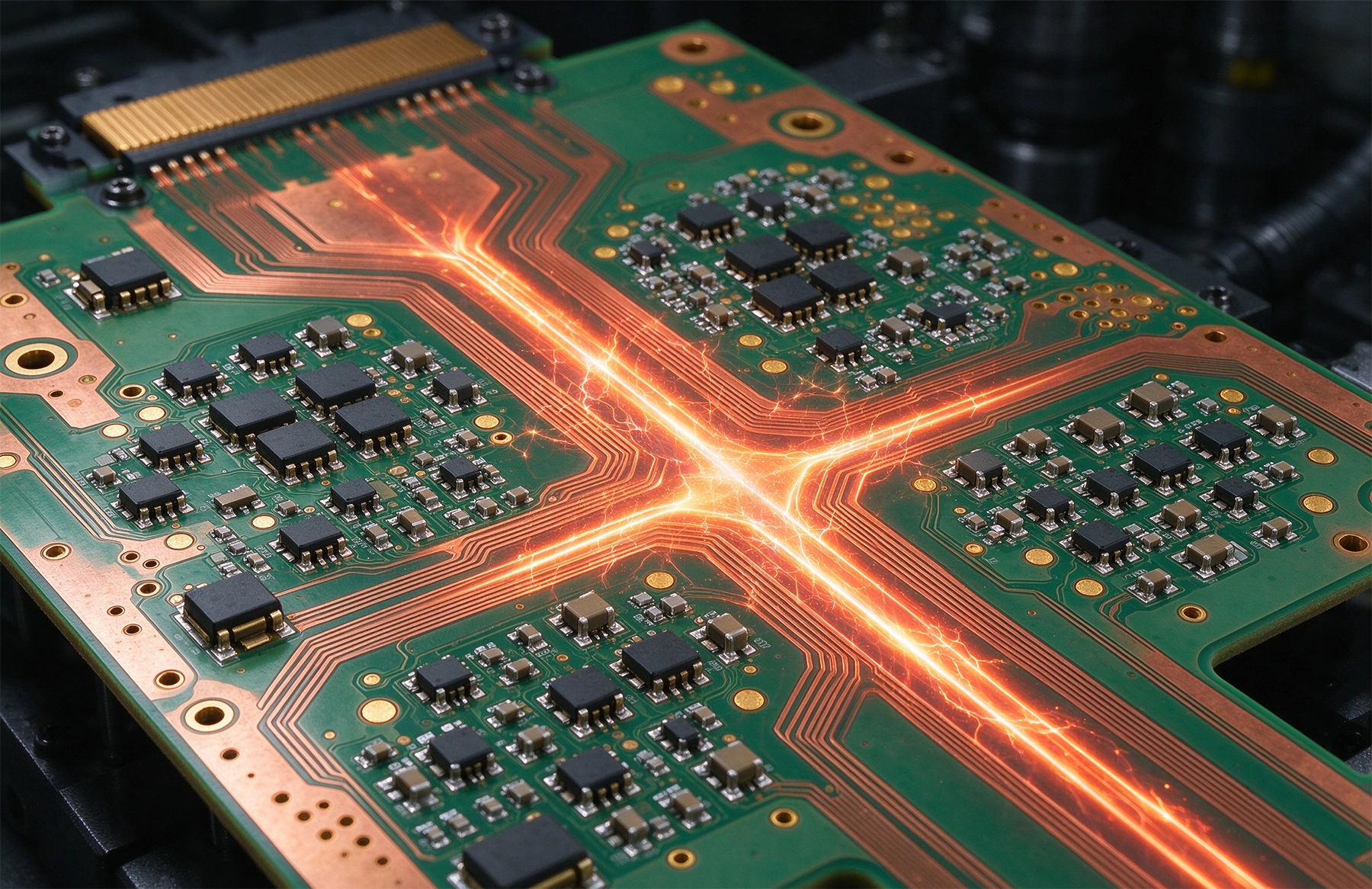
The copper weight measurement tells you how thick the copper layer is. Standard copper is measured in ounces per square foot (oz/ft²). Here's the breakdown that most engineers work with:
When you bump up to heavy copper, you're not just scaling up trace width. The entire board construction changes. Via structures need reinforcement, and the substrate materials often require upgrades to handle the thermal demands. It's a different beast altogether, and designing for it requires a different mindset.
Think about what happens when electricity flows through a conductor. The resistance generates heat—that's basic physics we all learned early on. With standard copper traces carrying high current, that heat builds up fast. The trace itself might reach temperatures that damage the board material or nearby components.
There's also the voltage drop problem. A thin trace has more resistance per foot than a thick one. By the time your power reaches the far end of the circuit, you might be seeing significant voltage loss. For some applications, that's just inconvenient. For others, like motor control systems, it means your motor doesn't get the voltage it needs to perform properly.
And let's not forget about electromigration. At high current densities, copper atoms can actually migrate through the dielectric material, causing eventual failure. It's not something that happens overnight, but it's a real reliability concern that heavy copper designs help avoid.
Building a Heavy Copper Pcb isn't as simple as pouring extra copper onto a standard board. The Manufacturing Process has to account for several factors that don't really matter with thinner copper.
One of the first things you learn when working with heavy copper is that trace width calculations change dramatically. The relationship between current capacity and trace width isn't linear—it's closer to exponential when you're working with thick copper. Ipc Standards give you the basic formulas, but experienced designers know to build in safety margins, especially for applications where failure isn't an option.
Temperature rise matters a lot here too. A trace that stays cool at 10 amps might get dangerously hot at 15 amps. Heavy copper gives you more headroom, but you still need to do the math properly.
Regular PCB vias are fine for signal traces, but when you're dealing with high current, those small barrel vias become bottlenecks. Heavy copper designs use different via strategies:
Each approach has its place depending on the current requirements and your budget. Copper-filled vias cost more but give you the best thermal and electrical performance. Slot vias are often a good middle ground for moderate current levels.
You won't find heavy copper PCBs in your smartphone—that device runs on thin, delicate traces carrying tiny currents. But in the world of Power Electronics, heavy copper is everywhere.
EV charging stations need to handle hundreds of amps during fast charging sessions. The main power conversion stages on these boards use heavy copper to minimize losses and manage the substantial heat generated. Without thick copper, the charging efficiency would suffer dramatically, and the hardware wouldn't last through its expected lifespan.
Motor control electronics have to switch high currents while maintaining precise control. Heavy copper bus bars integrated into the Pcb Design help distribute current evenly and provide the low-resistance paths that motor drives require. Many modern motor controllers use hybrid designs with both heavy copper traces and actual copper bus bars attached to the board surface.
Whether it's a server room power distribution unit or an industrial welding machine power supply, these applications demand robust current handling. Heavy copper PCBs reduce conduction losses, which directly translates to better efficiency and lower operating costs over the life of the equipment.
Solar inverters and battery management systems for renewable energy installations often use heavy copper designs. These systems need to handle high continuous currents while operating in environments where Heat Dissipation might be challenging. The reliability of heavy copper construction helps these systems operate for decades with minimal maintenance.
If you're coming from standard Pcb Design, heavy copper work has a learning curve. Here are some practical things nobody told me when I first started working with thick copper designs:
Start with your copper weight decision early in the design process. Changing copper weight late in the game often means significant layout changes because trace widths scale differently than you might expect. A 4 oz copper trace carrying 20 amps will be much wider than you probably think.
Thermal relief connections matter more than you might expect. While you're thinking about the main current paths, don't neglect the thermal connections between planes and pads. If you've ever wondered why a well-designed power board has certain pad connection patterns, Thermal Management is usually the reason.
Talk to your manufacturer before finalizing your design. Different fabrication shops have different capabilities when it comes to heavy copper. Some might handle 6 oz easily but struggle with anything over 10 oz. Getting their input early prevents unpleasant surprises during production.
The substrate material becomes more critical with heavy copper designs. Standard FR-4 works fine for many heavy copper applications, but when you're pushing serious power, you might want to consider higher-temperature materials like polyimide or even metal-core substrates.
Metal-core PCBs (MCPCBs) are particularly interesting for high-power applications. With a solid aluminum or copper base, these boards can dissipate heat much more effectively than traditional FR-4. The thermal path from your hot components goes directly into the metal core, then out to whatever heatsink or mounting surface you're using.
For extreme applications, some designers go with hybrid constructions that combine different material types in the same board. You might have standard FR-4 for control circuitry and metal-core sections for power handling. It's more expensive and more complex to manufacture, but sometimes it's exactly what the application needs.
Heavy copper PCBs cost more than standard boards—there's no getting around that. The raw material costs more, the processing time is longer, and not every fabrication house can do it well. But for many applications, the cost premium is absolutely justified.
When you factor in the improved efficiency, reduced cooling requirements, and better reliability, heavy copper often ends up being the cheaper choice over the product's lifetime. A board that runs cooler lasts longer. A board with lower resistance wastes less power. These benefits compound over time, especially in equipment that runs continuously.
After seeing quite a few heavy copper designs, I've noticed some patterns in what goes wrong. The most common issue is underestimating how much copper you actually need. It's tempting to cut costs by using thinner copper than the application really requires, but that leads to过热 problems that show up months or years later.
Another frequent mistake is ignoring the thermal interface between the board and whatever it's mounted to. The copper can handle the current, but if heat can't escape from the board, you're still going to have problems. Think about thermal vias, mounting screws, and thermal interface materials from the beginning.
Vias are often an afterthought, but they're critical in heavy copper designs. A single via might look fine in your CAD tool, but when you're pushing high current through it, that little barrel can get mighty hot. Plan your via strategy as part of your main current path design, not as an afterthought.
As electric vehicles become more common and industrial electrification accelerates, the demand for heavy copper PCBs keeps growing. Manufacturers are developing new techniques to produce thicker copper boards more efficiently, and new materials are coming online that can handle the thermal demands better than today's options.
We are also seeing more integration between traditional Pcb Technology and added copper structures. The lines between PCB and bus bar are blurring, with designs that use PCB processes to create copper structures that would have required separate fabrication in the past.
For engineers working in Power Electronics, understanding heavy copper design isn't optional anymore—it's becoming essential as more systems move from mechanical or discrete electronic solutions to integrated power electronics.
Heavy copper PCBs solve real problems that standard boards simply can't handle. When your application needs to move significant current, the extra copper weight gives you lower resistance, better thermal performance, and improved reliability. The additional cost is real, but often justified by the benefits.
If you're designing a system that will handle more than a few amps continuously, it's worth evaluating whether heavy copper makes sense for your application. The engineering is more challenging than standard PCB design, but the results are worth the effort.
Contact us to discuss your requirements for Heavy Copper Pcb solutions tailored to your specific application needs.
Common DFM Mistakes in Rigid-Flex PCB Layouts: A Comprehensive GuideJuly/29/2026
Smart Home Devices: Integrating High-Frequency PCBs for Wi-Fi/BluetoothSeptember/21/2026
Selecting a High-Speed PCB Manufacturer for 5G TelecommunicationsAugust/13/2026
Controlled Impedance Testing: Ensuring Performance in High-Speed BoardsOctober/15/2026
Why Medical Devices Require Specialized High-Reliability PCB ManufacturersSeptember/15/2026

High-Frequency PCBs in Radar and Satellite Communication SystemsAugust/03/2026
What to Look for in a Reliable SMT PCB Assembly Partner in ChinaAugust/11/2026
Why Automotive Electronics Demand High-Reliability Multilayer PCBsJuly/13/2026