Open Nav

The evolution of electronic devices has pushed manufacturers to seek more sophisticated solutions for increasingly complex design requirements. Rigid-flex PCBs have emerged as a game-changing technology, combining the stability of rigid boards with the adaptability of flexible circuits. This hybrid approach addresses many challenges that traditional rigid boards cannot solve alone. In this article, we'll explore the top five advantages of using rigid-flex PCBs in modern electronics and why they matter for your next project.

One of the most significant advantages of rigid-flex PCBs is their ability to maximize space utilization in compact electronic devices. Traditional rigid boards require connectors and cables to interface between different sections, which consume valuable real estate and add bulk to the overall design.
Rigid-Flex Circuits eliminate these additional components by integrating rigid and flexible sections into a single continuous board. The flexible portions can fold, twist, or bend to fit into non-traditional spaces within the device enclosure. This integration is particularly valuable for:
By eliminating separate connectors and cables, rigid-flex PCBs can reduce overall board area by up to 60% compared to equivalent rigid-only designs. This space savings translates directly into smaller, lighter end products that meet the demands of modern consumer expectations.
Conventional electronic assemblies with multiple rigid boards connected by cables and connectors represent potential failure points. Each connection interface is vulnerable to mechanical stress, vibration, and thermal cycling. Rigid-flex PCBs address this vulnerability by reducing the number of discrete connection points.
The elimination of connectors and cable assemblies means fewer solder joints and mechanical interfaces that could fail during product lifecycle. The flexible sections of rigid-flex boards are specifically engineered to withstand repeated bending cycles without cracking or delaminating. This makes them ideal for applications where:
Our experience shows that rigid-flex assemblies typically demonstrate 3-5 times better failure rates compared to traditional rigid-female header-cable configurations. The reduction in component count also simplifies Quality Control and increases first-pass yield rates during manufacturing.
Signal quality becomes increasingly important as electronic devices operate at higher frequencies and data rates. Rigid-flex PCBs offer significant advantages for maintaining Signal Integrity throughout the circuit.
The continuous copper runs between rigid and flexible sections eliminate the impedance discontinuities that occur at connector interfaces. When you use separate rigid boards connected by cables, each connector introduces parasitics that can degrade signal quality, cause reflections, and increase electromagnetic interference (EMI).
Key Signal Integrity benefits include:
For high-speed applications like USB 3.0, HDMI, and PCIe interfaces, these benefits translate directly into more reliable data transmission and reduced bit error rates. The flexible sections can also be designed with Controlled Impedance to match the rigid portions exactly.
Modern electronic devices often require unconventional shapes and three-dimensional form factors that challenge traditional Pcb Design approaches. Rigid-flex technology provides designers with unprecedented freedom to create complex geometries that would be impossible or impractical with rigid boards alone.
The flexible portions can navigate around obstacles within the device enclosure, fold to create multi-layer stackups in limited spaces, and even wrap around edges to connect components on different planes. This capability is particularly valuable for:
The ability to customize the rigid-to-flex transition zones also allows designers to optimize bend radii for specific mechanical requirements. This customization ensures that the board performs reliably under the exact mechanical conditions of the target application.
While rigid-flex PCBs may have higher initial tooling costs compared to traditional rigid boards, they often prove more economical over the full product lifecycle, especially in high-volume manufacturing scenarios.
The cost advantages become apparent when considering total manufacturing expenses:
For products requiring medium to high production volumes (1,000+ units), these factors typically offset the higher PCB Fabrication costs within the first 12-18 months of production. The break-even point depends on the complexity of the alternative assembly and the expected product lifetime.
Rigid-flex PCBs have found success across numerous industries and application areas. Understanding where this technology provides the most value helps inform design decisions:
Medical devices demand exceptional reliability, miniaturization, and often require biocompatible materials. Rigid-flex PCBs meet these requirements while enabling innovative product designs for pacemakers, hearing aids, patient monitoring systems, and surgical instruments.
The automotive industry benefits from rigid-flex technology in dashboard controls, infotainment systems, advanced driver assistance systems (ADAS), and under-hood applications. Vibration resistance and temperature tolerance make these boards well-suited for the demanding automotive environment.
Weight reduction is critical in aerospace applications, where every gram impacts fuel efficiency and payload capacity. Rigid-flex PCBs provide the reliability required for flight systems while contributing to overall weight savings.
Smartwatches, fitness trackers, and other wearables rely on rigid-flex technology to achieve the compact form factors and durability consumers expect. The ability to conform to curved surfaces enables ergonomic designs that traditional rigid boards cannot achieve.
Successfully implementing rigid-flex technology requires attention to specific design factors that differ from traditional rigid board design:
Working with an experienced rigid-flex manufacturer early in the design phase helps identify potential issues and optimize the design for both performance and manufacturability.
Rigid-flex PCBs represent a mature, proven technology that offers compelling advantages for modern electronic designs. From space optimization and enhanced reliability to superior signal integrity and design flexibility, the benefits extend across the entire product lifecycle.
While initial costs may be higher than traditional approaches, the Total Cost Of Ownership often favors rigid-flex solutions, particularly for applications requiring reliability, miniaturization, or complex three-dimensional packaging. As electronic devices continue to evolve toward smaller, lighter, and more sophisticated designs, rigid-flex technology will play an increasingly important role in bringing these innovations to market.
Whether you're developing the next generation of Wearable Technology, medical devices, or Automotive Electronics, rigid-flex PCBs offer a pathway to differentiate your product through superior design, reliability, and performance.
Implantable Medical Devices: Precision and Reliability in PCB ManufacturingSeptember/24/2026
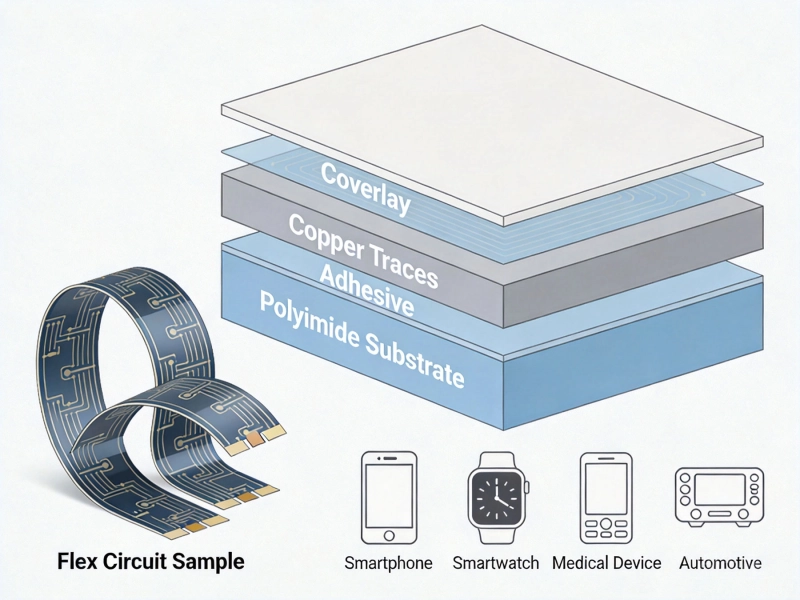
Introduction to Flexible Printed Circuit Boards (FPC): Beginner's GuideMay/18/2026
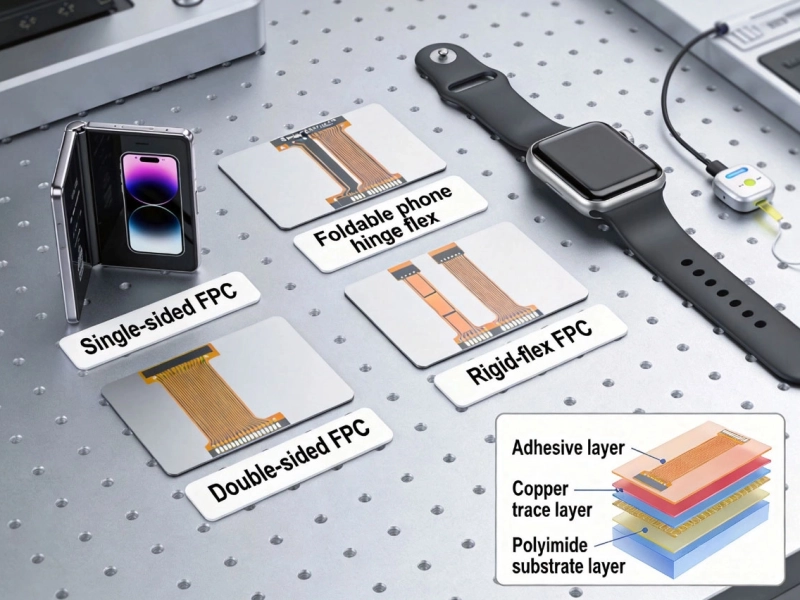
Introduction to Flexible Printed Circuit Boards: A Practical Engineering GuideMay/18/2026
What is Flexible PCB? Complete Guide from China Flex PCB ManufacturerMay/18/2026
Dynamic vs. Static Flex: Which FPC Type Fits Your Project?July/20/2026
Flexible PCBs in Modern Cars: Sensors, Displays, and Comfort SystemsSeptember/01/2026
Rigid-Flex PCB Design Guide: Bridging the Gap Between Rigid and FlexJuly/03/2026

High-Frequency PCBs in Radar and Satellite Communication SystemsAugust/03/2026